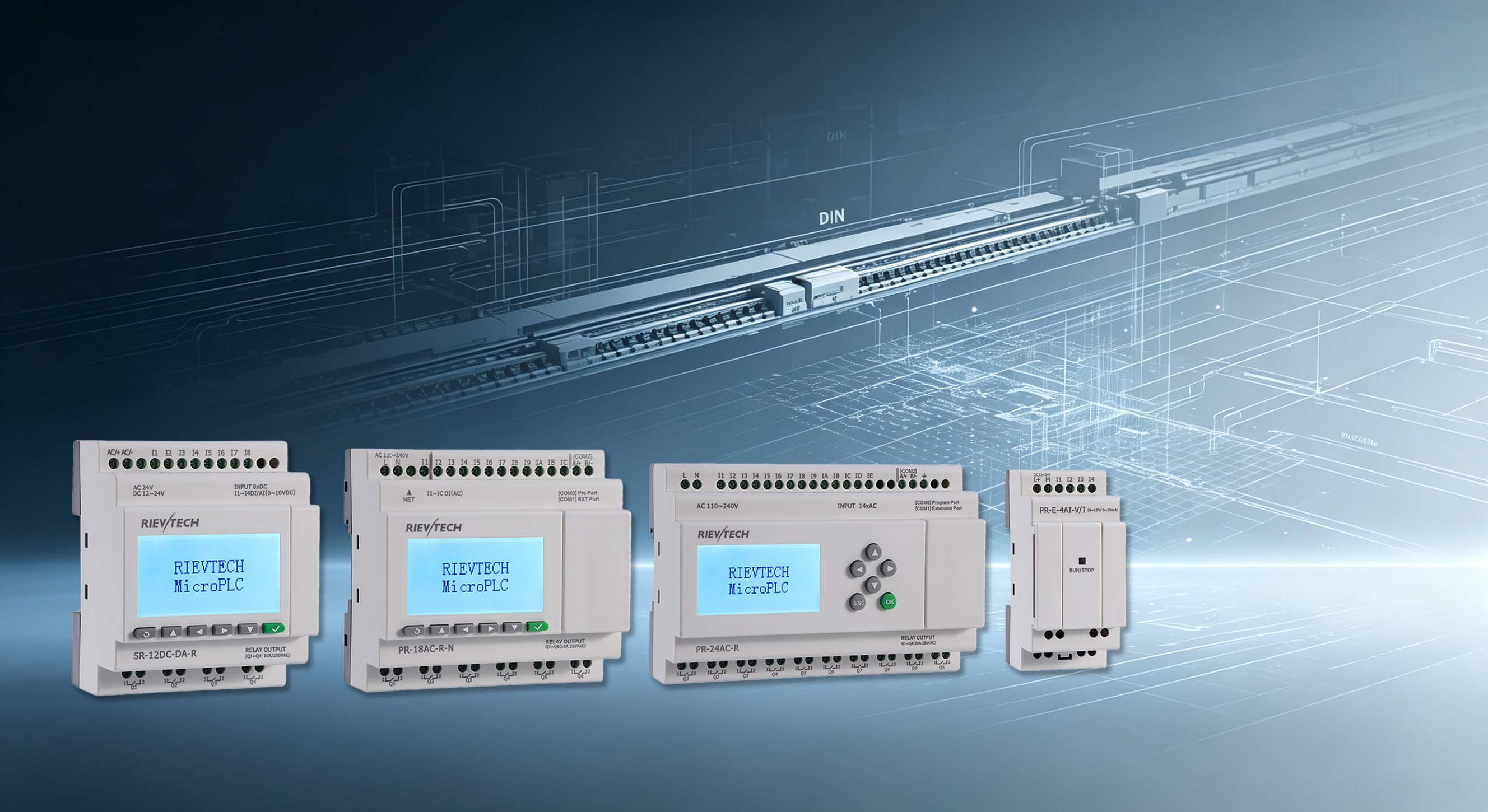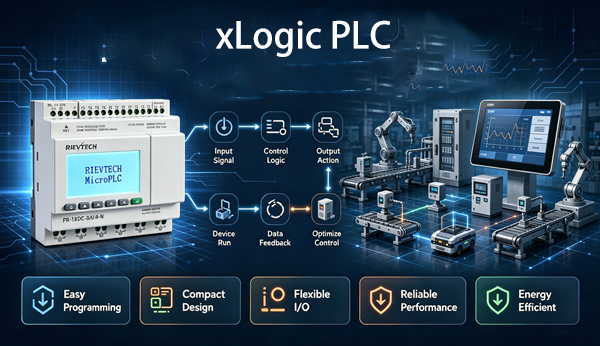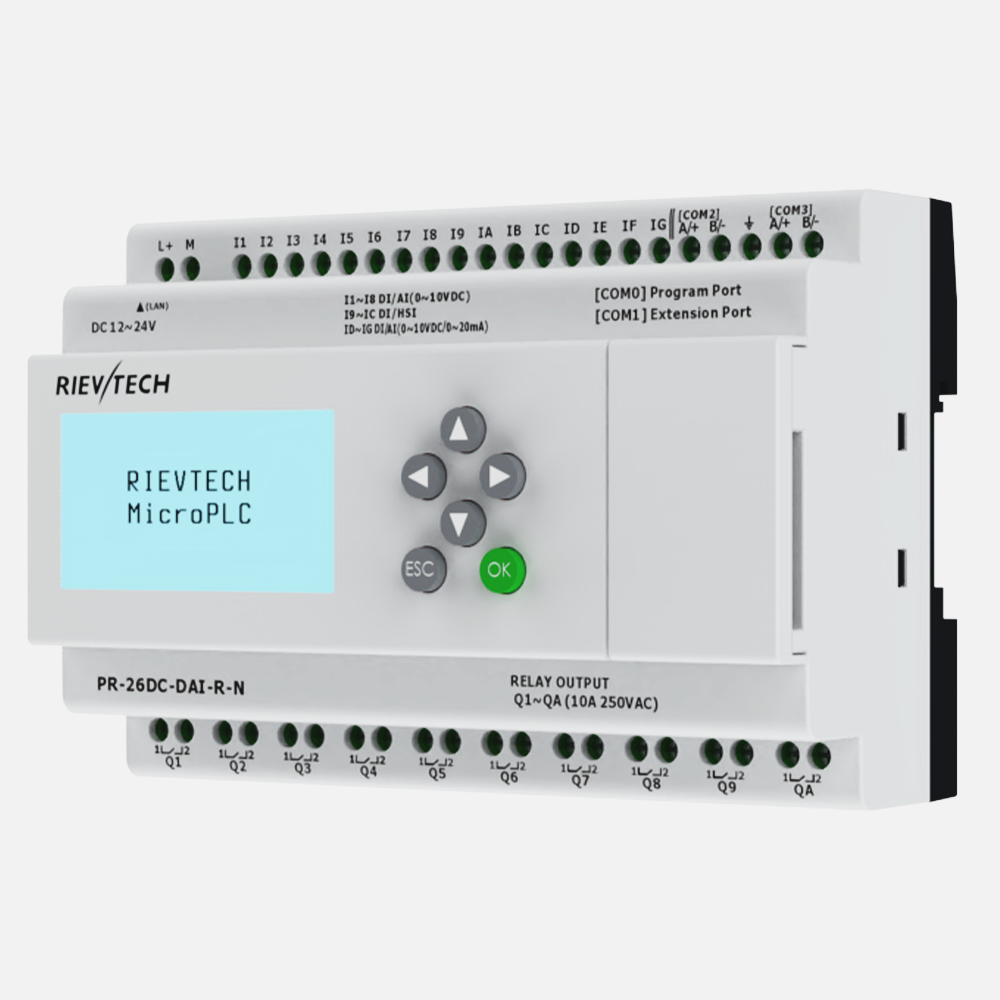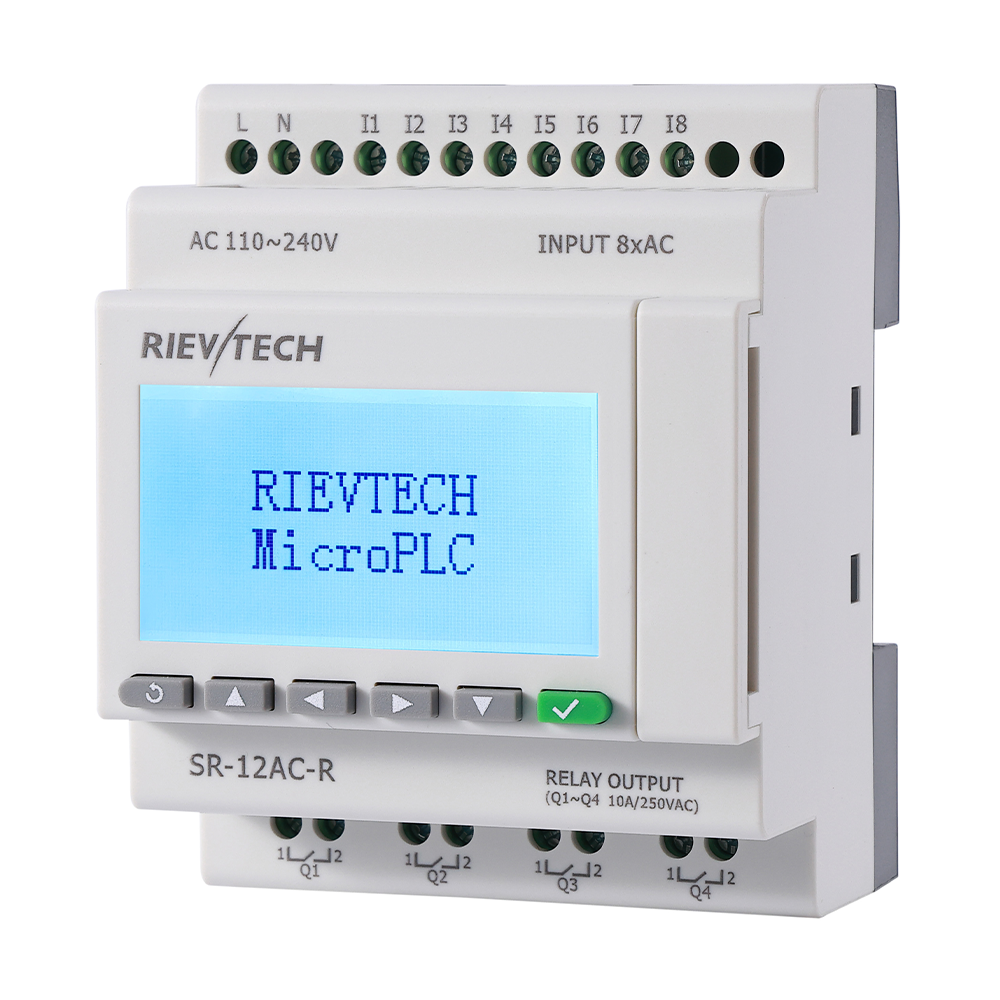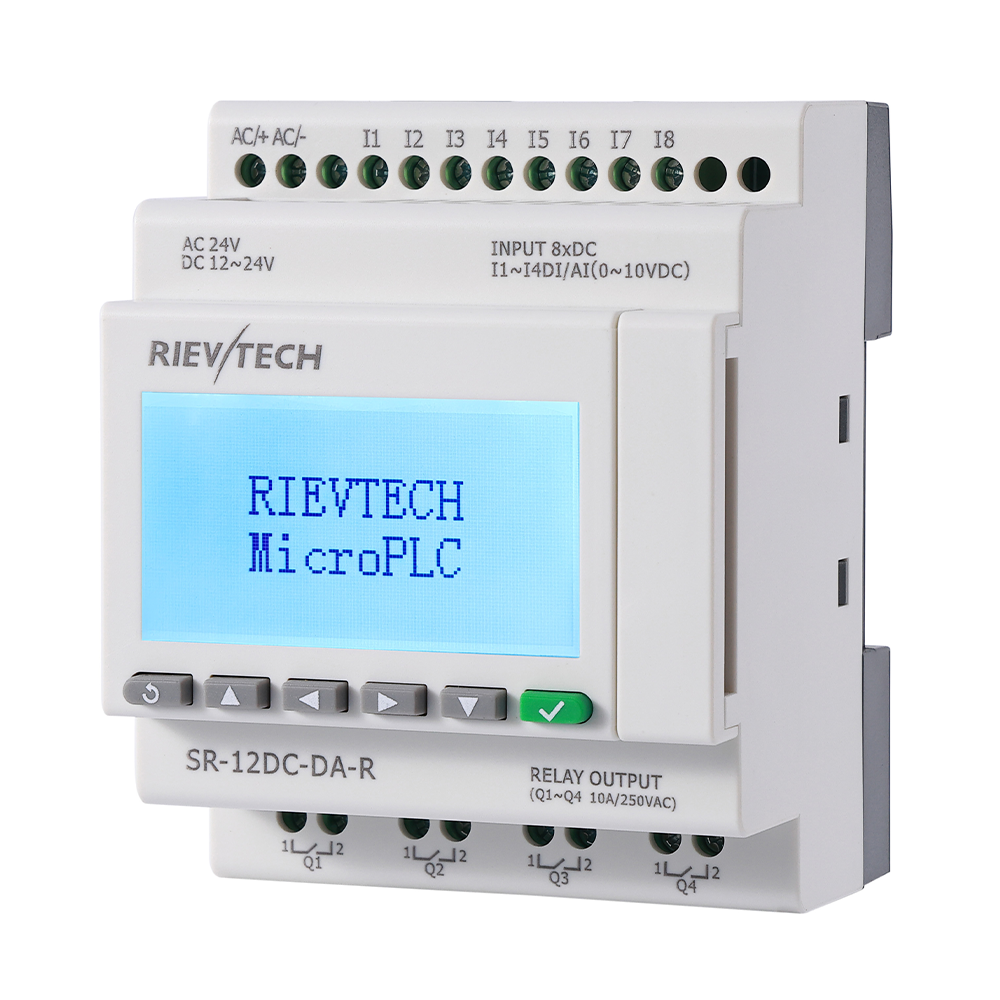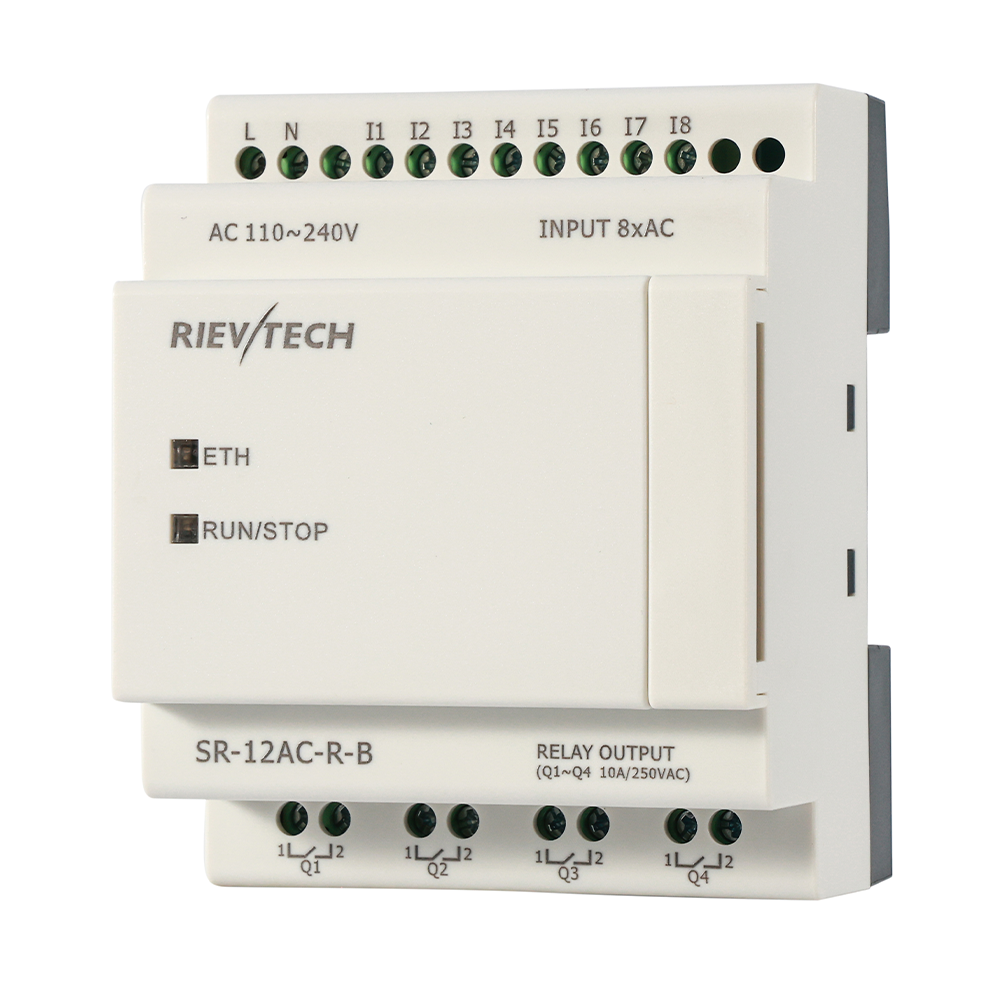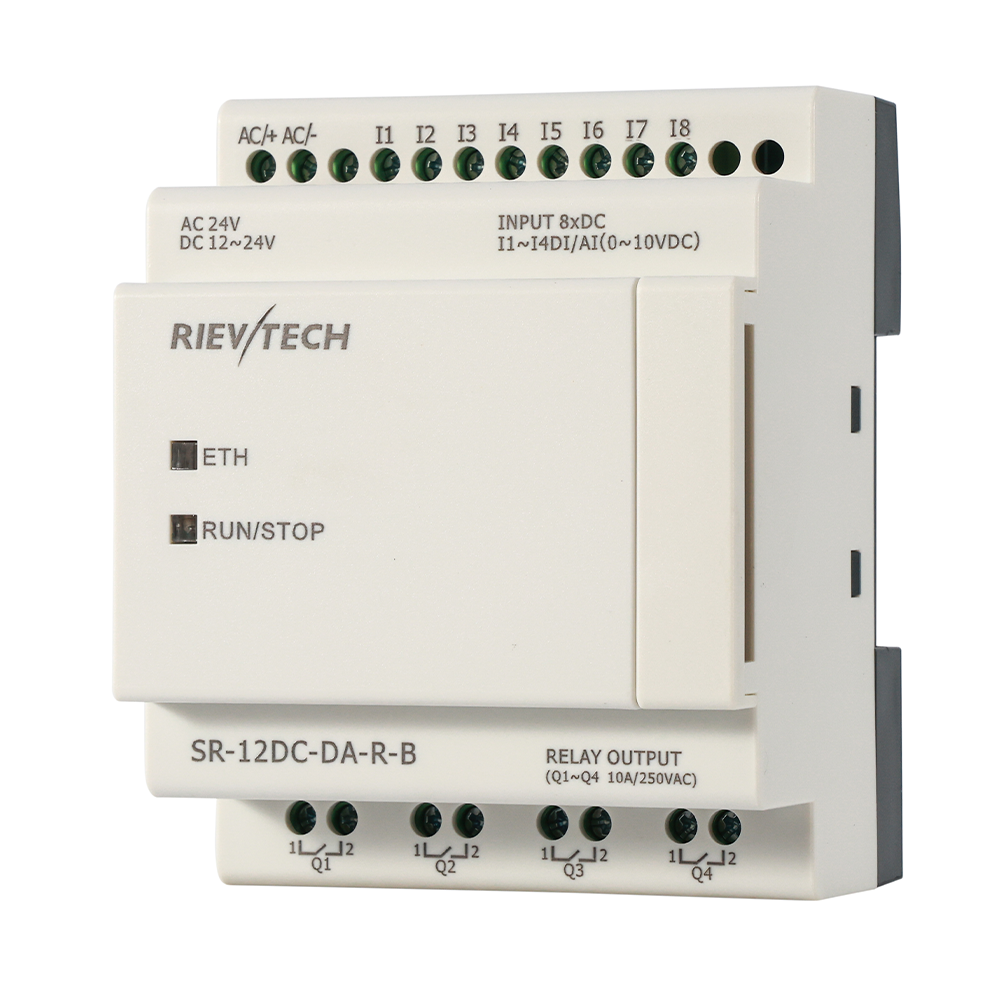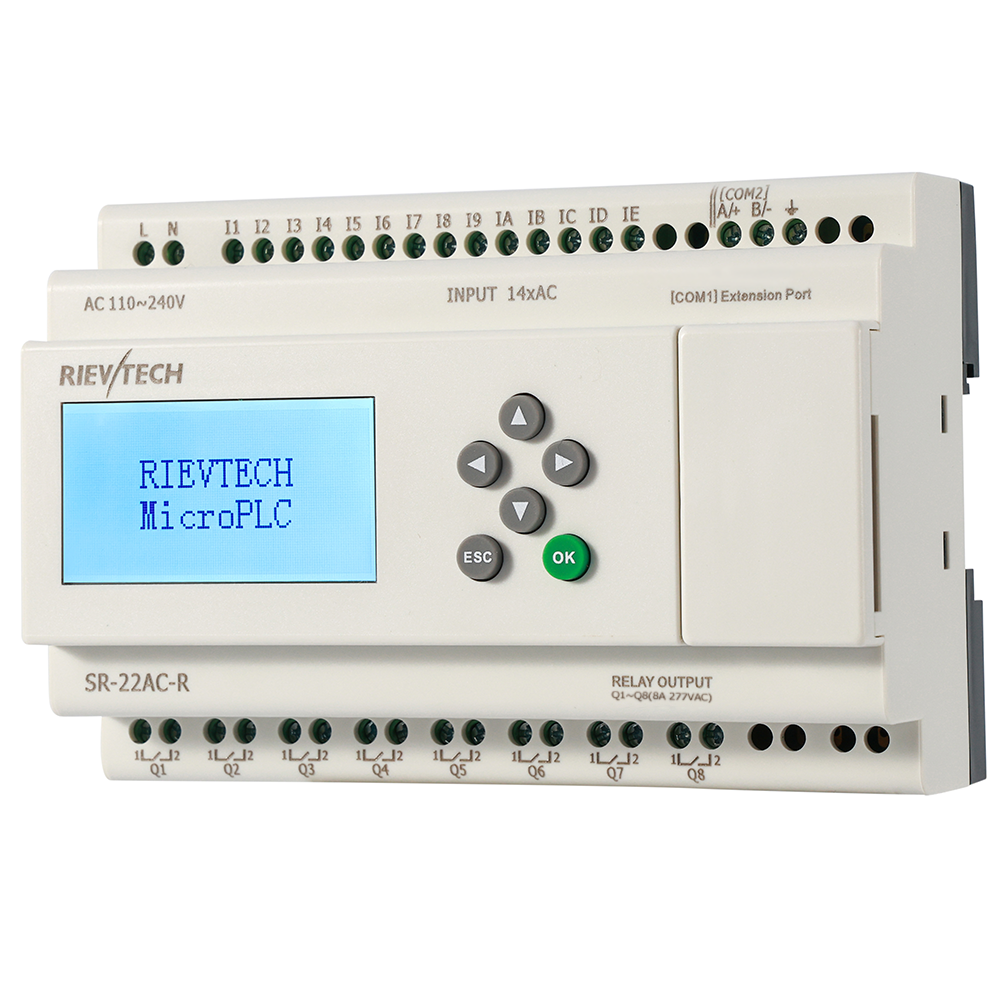
Two families, one software, but they are not the same machine. The SR series is the compact, budget-friendly line; the PR Ethernet series is the one that scales — more I/O points, more memory, more protocol options. This guide lays out the differences side by side so you can pick the family that actually fits the job, and it includes the latest SR firmware update that changed some of the old answers.
Model Range and Power Supply
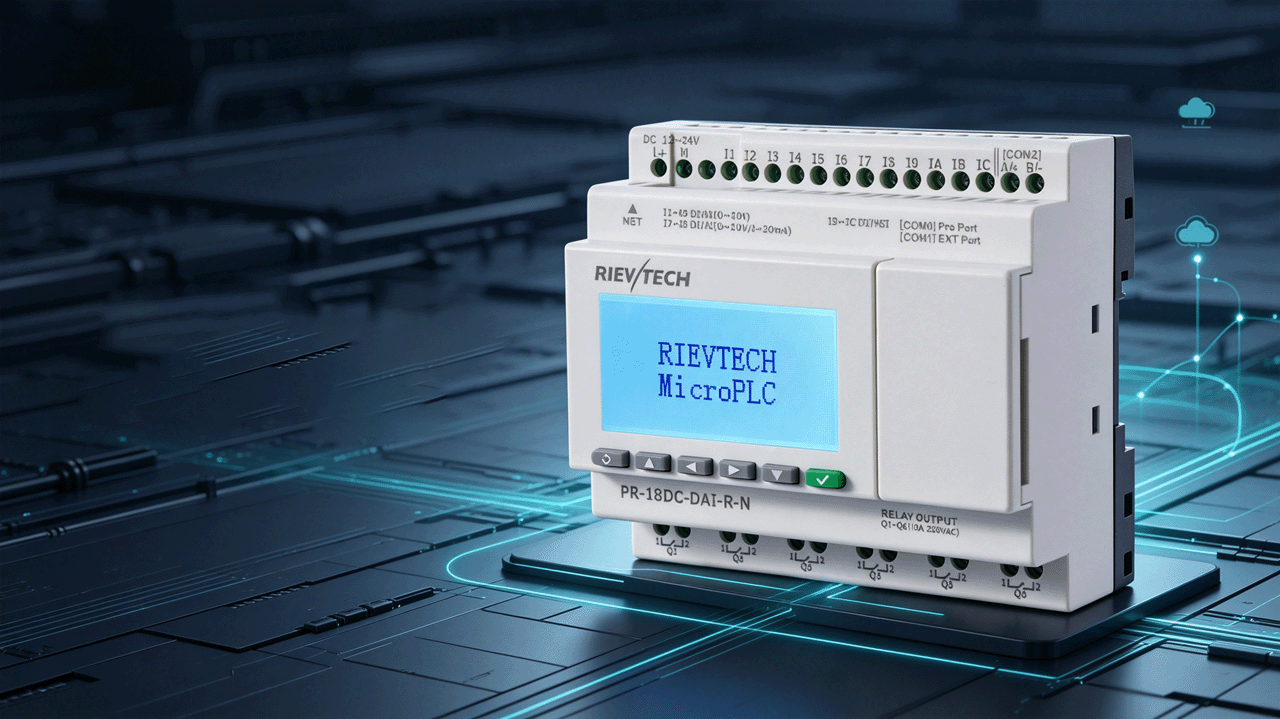
The SR series comes in 12-point and 22-point versions, powered by DC12~24 V / AC24 V or AC110~240 V. The PR Ethernet series comes in 12-point, 18-point and 26-point versions, powered by DC12~24 V or AC110~240 V. The practical difference: PR covers the middle size (18 points) that SR skips, and PR models carry more analog hardware.
Input, Output and Analog Channels
PR Ethernet models usually have more analog channels, and some analog inputs accept both voltage and current — for example I7-I8 on the PR-18N and ID-IG on the PR-26N. If your application is sensor-heavy, that extra analog density is hard to beat on the compact family.
High-Speed Counting and PWM
This is the point where the older documents are now out of date. Originally the SR series had no high-speed counting channels. With the latest SR firmware (SR12 V0.16, SR12-B V0.05, SR22 V0.05, SR22-B V0.05), the DC models of the SR series support 4-channel high-speed counting at 65 kHz — SR12/SR12-B on I5~I8, SR22/SR22-B on I9~IC — plus a new AB encoder block that occupies I5 and I6 and is currently supported only by the SR-12DC-DA-R. What the SR series still does not have is high-speed PWM output. The PR Ethernet DC models keep their 4 high-speed counting inputs, and their transistor outputs support high-speed PWM, which is what you need for stepping drives and fast pulse trains.
Communication Interfaces
The port inventory differs in three ways:
- Programming port COM0 — not present on SR. All PR Ethernet models have it.
- Built-in RS485 — the SR-12 has none, the SR-22 has one. PR-12N and PR-18N have one, the PR-26N has two. Both families can add one more RS485 channel with the SR-RS485 expansion module.
- Ethernet — both have an RJ45 port, but the SR series supports only 2-way TCP connections while the PR Ethernet series supports 8-way TCP connections. For a server that must answer several clients at once, that number decides the family.
Program Capacity
The SR series was shipped with 25 KB of program memory and 256 FBD blocks. The current firmware raises it to 32 KB and 512 FBD, and adds VB, VW and VD blocks, APP blocks and the AB encoder block — so the small controller has grown up. The PR Ethernet series starts higher: 64 KB program memory, 512 FBD on the PR-12N, and 1024 FBD on the PR-18N and PR-26N. If your program is a real state machine with lots of analog math, the PR headroom matters.
Expansion Capability
The SR series connects up to 3 SR-E expansion modules. The PR series connects up to 16 PR-E expansion modules — more than five times the room for digital, relay, analog and PT100 I/O. When the panel is expected to grow over the years, count the slots, not just today's I/O.
Programming Language
Both families support FBD and ladder. Two differences: the PR Ethernet series also supports C language subroutines inside ladder programming, which SR does not. And the PR runs FBD and ladder as dual systems — you download either program directly with no conversion step — while the SR needs the firmware update package to switch programming language modes. With the newest SR firmware, switching is also available from the panel: in ladder mode, press ESC + OK to enter the FBD menu.
Display and Data Storage
The SR-B series (model suffix -B) has no LCD panel or keys — a plain unit for panel builders. All other SR models and the PR Ethernet series have the LCD display and keys. On the data side, the PR Ethernet series includes a built-in data logger with an SD socket, which the SR series does not have; if you need local historical logging without a PC, that is a PR feature.
Protocols
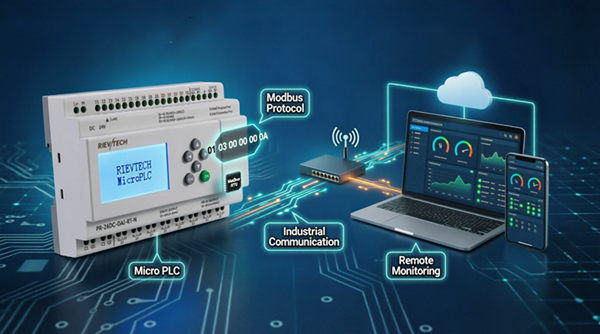
Both families support Modbus RTU and Modbus TCP/IP and can act as Modbus master or slave. The PR Ethernet series goes further with MQTT, BACnet MSTP and BACnet IP — none of which the SR series supports. For IoT dashboards, cloud platforms or building automation (BACnet), the PR line is the one with the native keys.
Which One Do You Pick?
Choose the SR series when the machine is compact and the requirements are classic: a handful of I/O, relay outputs, Modbus to one or two devices, and a tight budget — the DC models now bring 65 kHz counting for speed sensors, and the 512 FBD firmware covers most real programs. Choose the PR Ethernet series when you need more than one of these: many analog channels, transistor outputs with high-speed PWM, more than two simultaneous TCP clients, MQTT or BACnet, C subroutines, big FBD programs, 16 expansion modules, or on-board SD data logging.
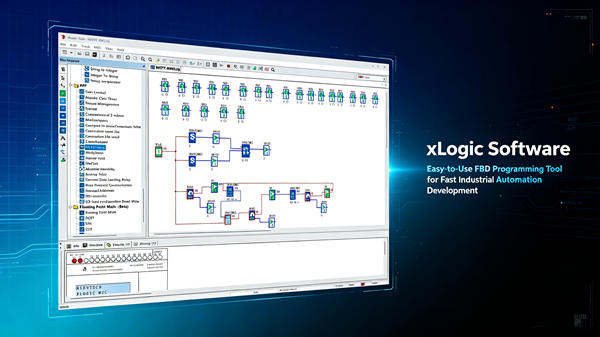
Both families share xLogicSoft, the same free FBD environment, and the same Modbus setup logic — see our FAQ/">PLC FAQ, plus the SR and PR-N Ethernet configuration guides for the setup side.