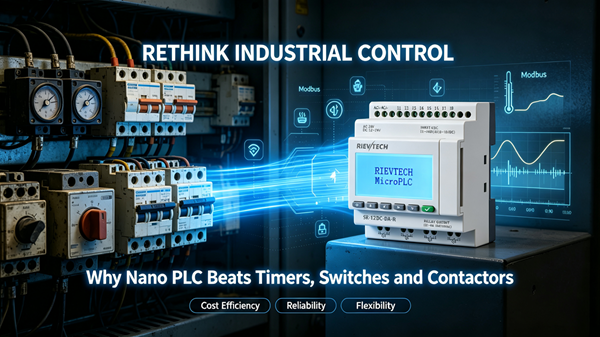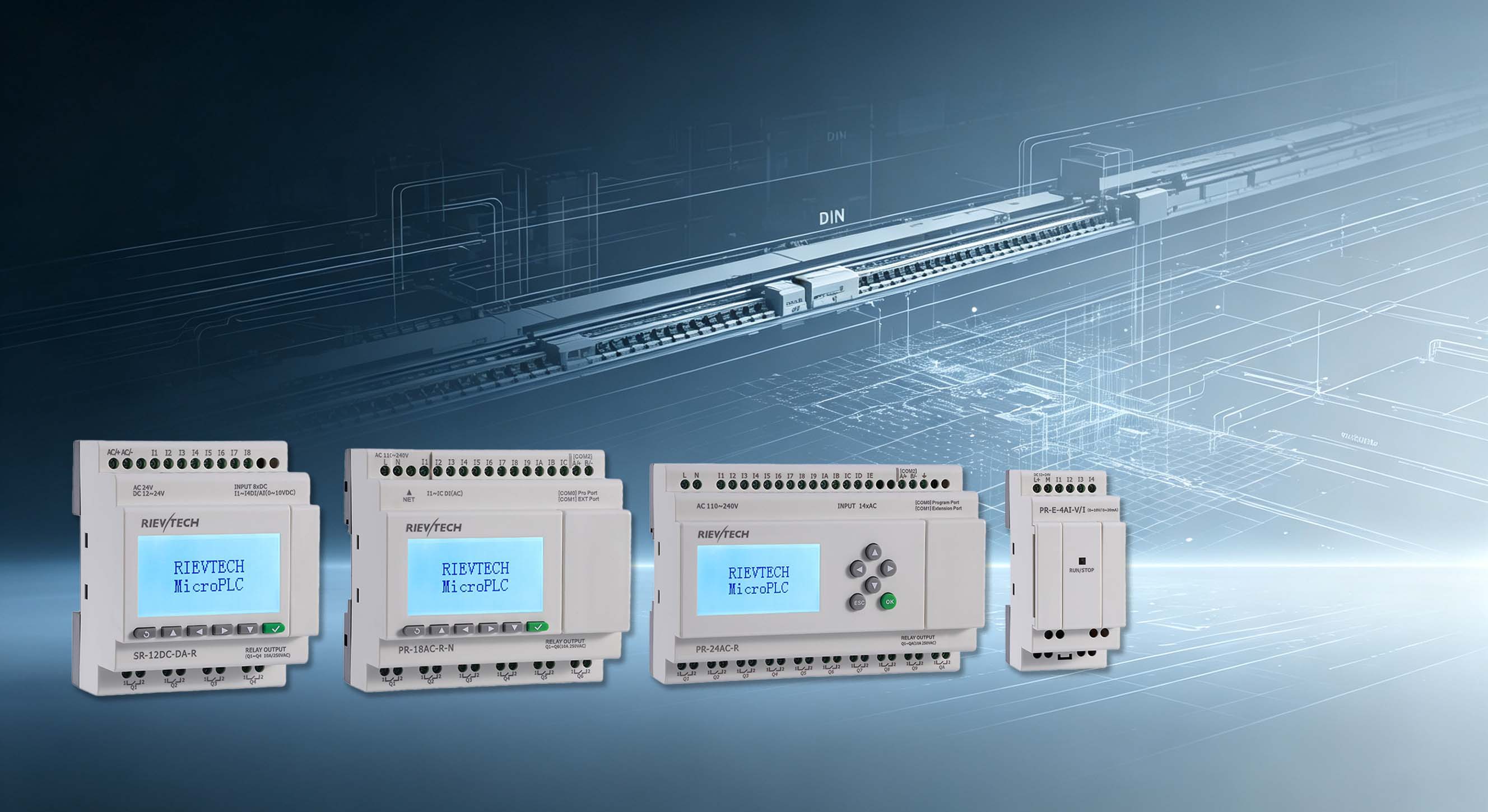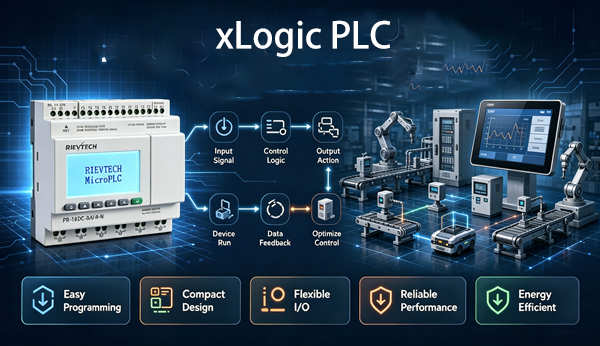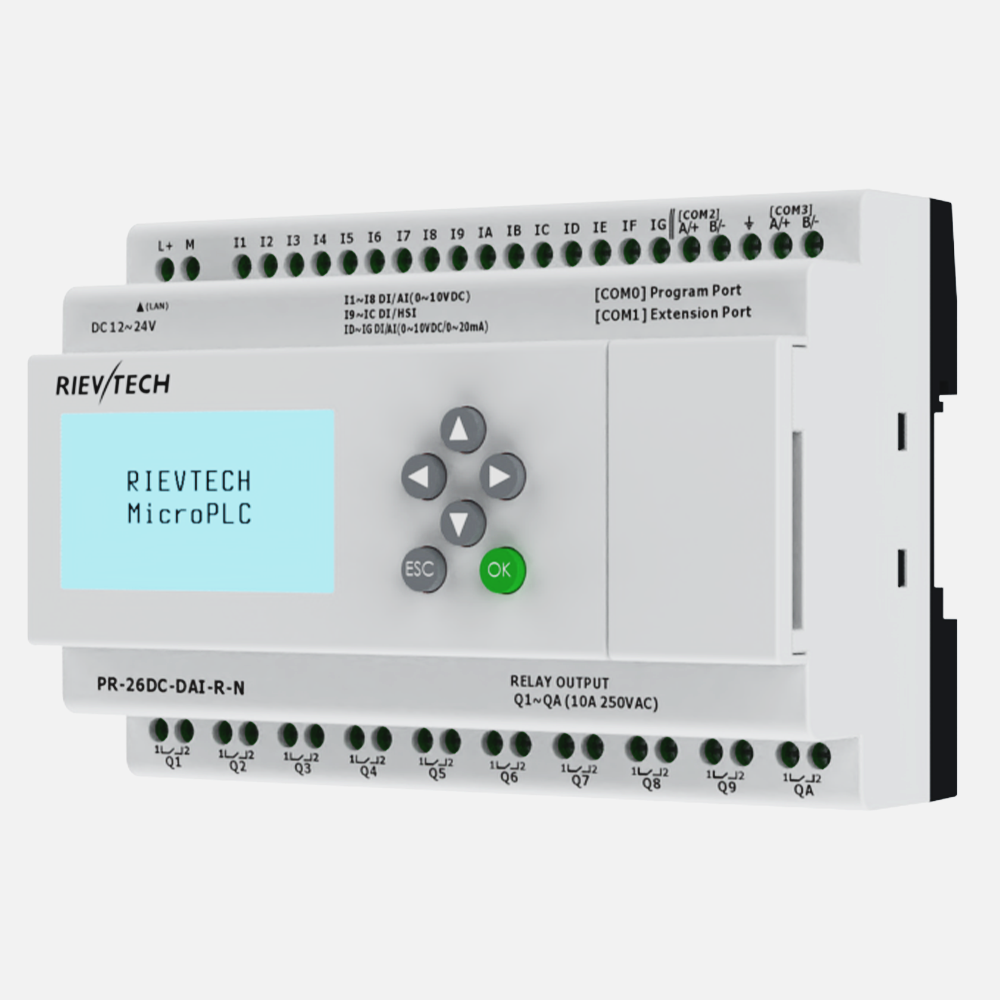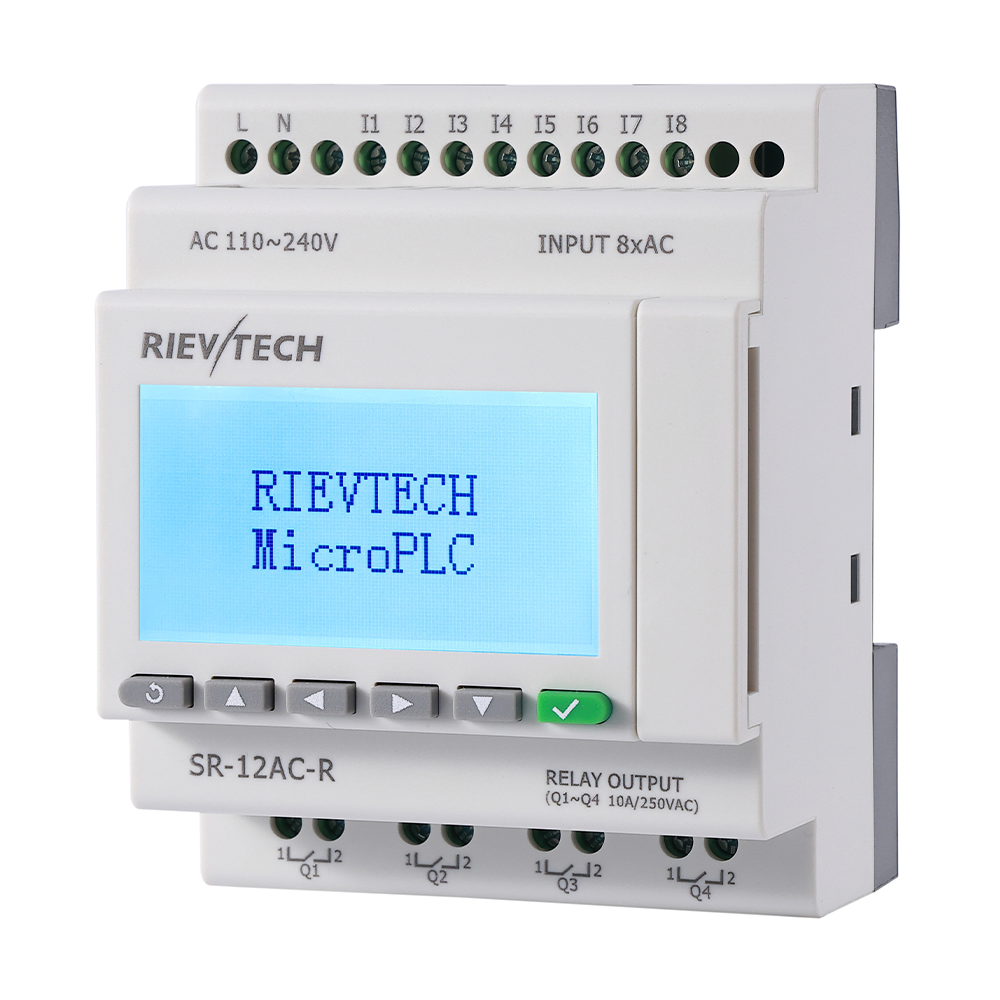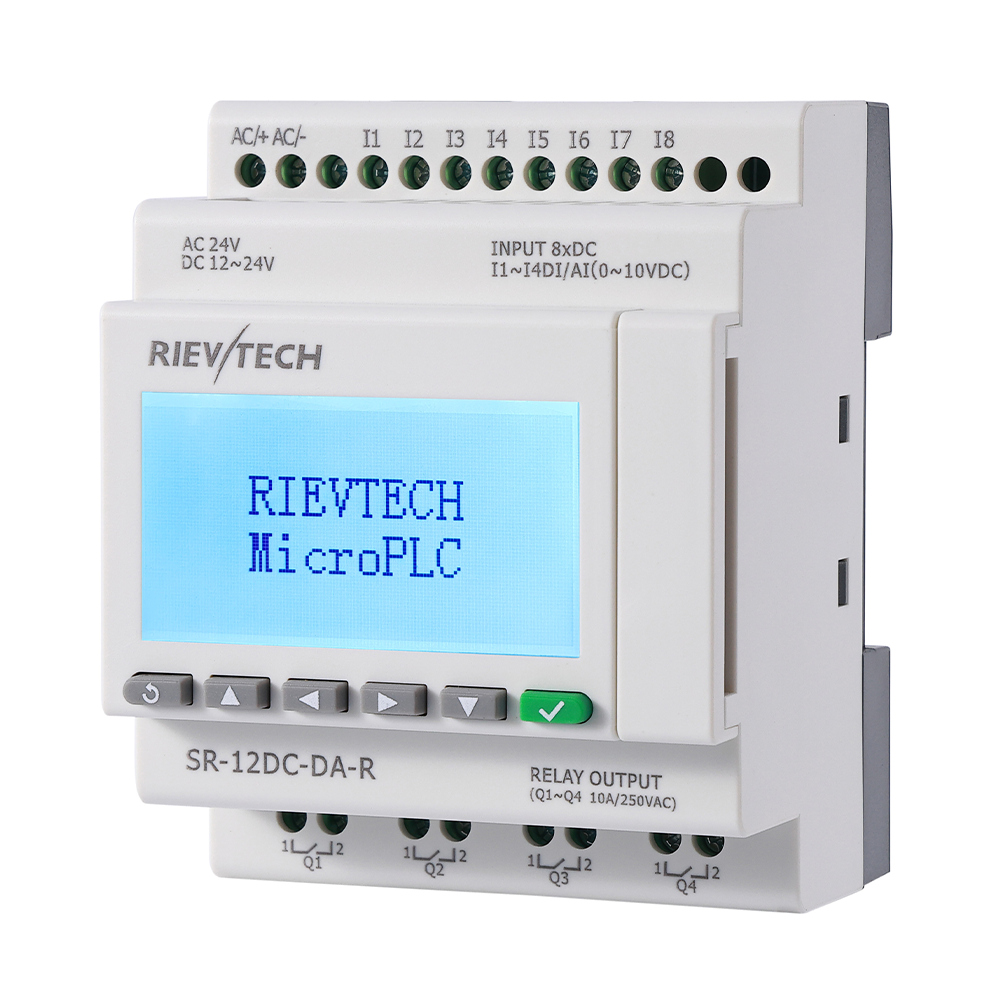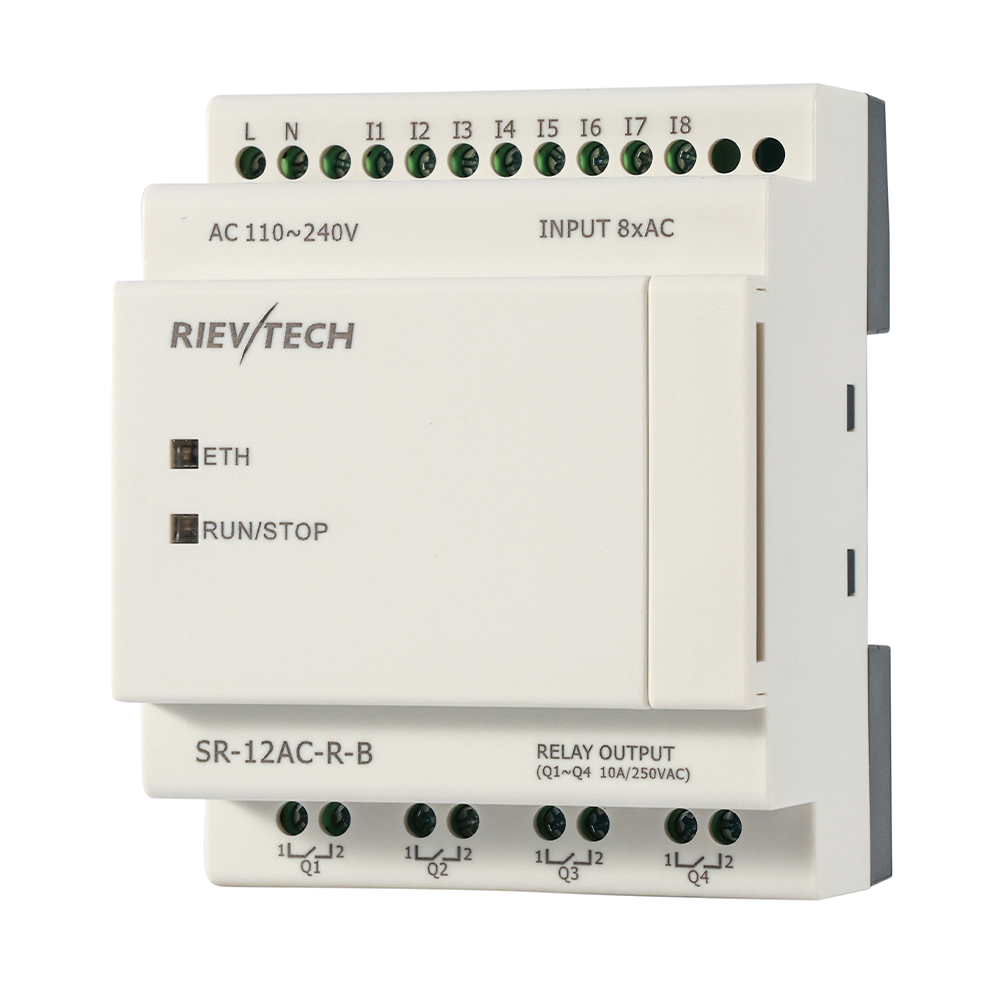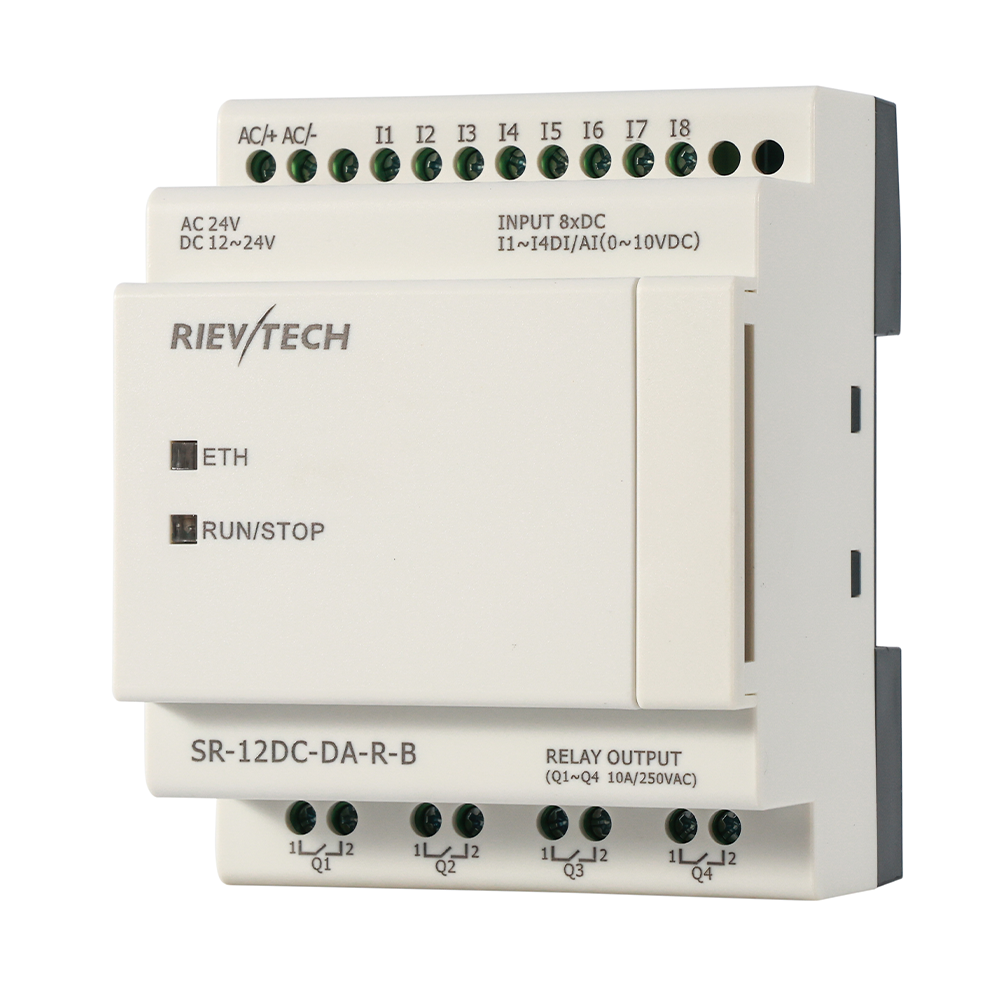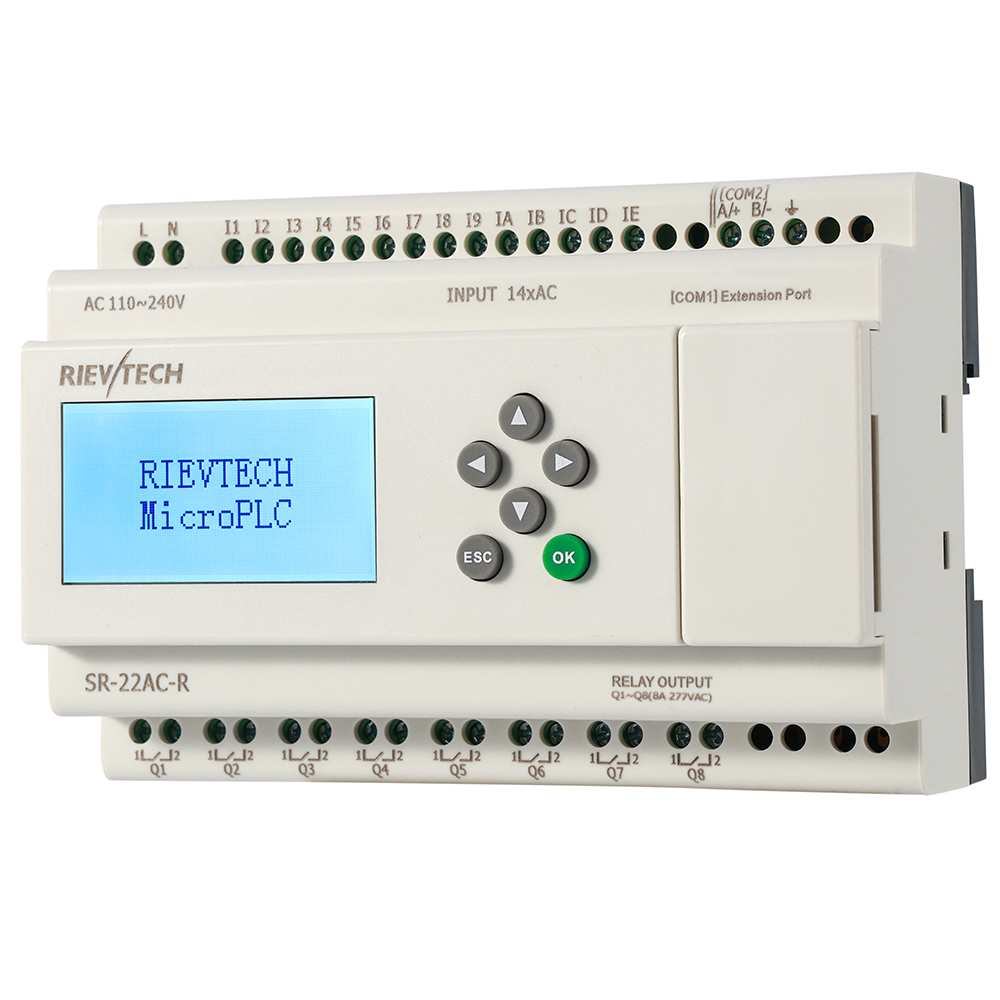
Count the components in an old control panel and weep: timers, relays, contactors, a counter module, a time switch — each one a single-purpose box that can fail, drift, or simply vanish from the spare-parts catalog. The SR series replaces most of that shelf with one DIN-rail module and a program you can change without touching a screwdriver.
I have done this swap on machines from the 1990s, and the look on the electrician's face when the new module does everything the old panel did — plus the things it never could — is worth the whole exercise.
What the SR Series Actually Replaces
The SR-12 and SR-22 carry up to 512 function blocks — on-delay and off-delay timers, pulse relays, softkeys, counters, edge detection, analog handling, and a real-time clock with summer/winter scheduling. One of those modules replaces:
- Multiple electromechanical timers
- Relay logic for interlocks and sequences
- A time switch for schedules
- A seperate counter for production counting
- The spare-parts shelf they all lived on
That is not a theoretical list. Every item on it is a box I have personally pulled out of a panel and thrown in the bin.
The 15-Minute Migration Path
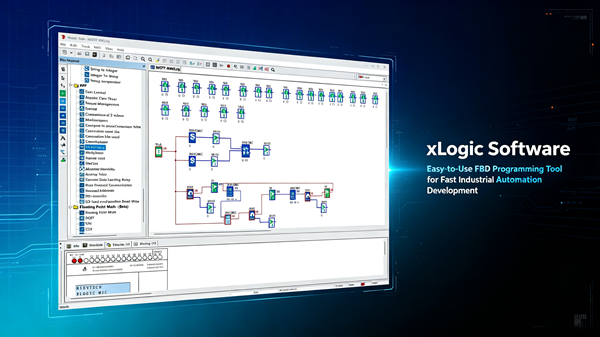
The wiring does not need to change — that is the beauty of a screw-terminal controller. The old timer's coil wires go to an input; the contactor coil connects to an output; the program recreates the logic in blocks. Load it with xLogicSoft over the Ethernet, and the machine runs on the new brain in the time it takes to drink a coffee.
For the counter modules, the high-speed counting inputs handle production pulses without scan-time drama. For the time switches, the RTC keeps the schedule and even survives a 20-day power cut.
Real Panel: Conveyor Interlock Upgrade
A conveyor line with three interlocked sections ran on a panel containing nine relays, two timers and a counter. The replacement SR-12 ran the whole interlock sequence, the two timers, the parts counter, plus an alarm output that the old panel simply did not have. The cabinet lost half its components, gained a diagnostics page, and the maintenance log went quiet.
The line manager asked what the spare relays were for. "Insurance," I said, "that you will never need."
Why This Pays Even on Tiny Jobs
The economics are not about the relay price. They are about the change: with a relay panel, every improvement means rewiring. With a controller, every improvement means a programming session and a download. The machine can now evolve without a panel redesign, and that optionality is worth more than the component savings.
And when the program logic changes — becuase it always does — you do not open the cabinet. You open the software.
The Honest Caveat
An electrician who has wired relays for thirty years will look at the first FBD program and frown. Budget for the learning curve, run one project side by side with the old panel, and let the new machine earn the trust. It will — usually by the second fault that the old panel could not have reported at all.
Counting the Savings, Honestly
Run the math on a real panel and the numbers surprise even cost-focused buyers. Take the conveyor example: nine relays, two timers, one counter, plus the spares shelf behind them. Component cost for the old solution — around three hundred dollars at distributor pricing, plus the shelf of spares at another hundred. One SR-12 at street price replaces all of it, and the spares shelf shrinks to a single module.
The bigger number is the labour line. A relay panel failure means diagnosis, ordering, wiring, testing — typically a half-day with a technician at shop rates, plus the downtime of the machine. A controller failure means swap the module, reload the program from the archive, and the machine is back in under an hour. For a line that runs production, the downtime difference alone pays for the upgrade in one incident.
Then there is the change order. Relay logic frozen at commissioning cannot absorb the request that always arrives in month three: "can we add a two-second delay before the reject gate?" On a relay panel that is a new timer, new wiring, a panel change. On a controller it is one block, one download, ten minutes — and the change order is quoted at software time, not panel time.
That is the arithmetic nobody puts on the datasheet. The component cost is the small number. The change flexibility is the large one, and it compounds every time the machine evolves.
The Panel of the Future
Here is a thought experiment worth running: take the oldest relay panel in your plant and imagine it with a controller inside. Not just the logic — the whole concept of maintenance changes. The panel gains a status readout, a diagnostics page, and a communication port. The maintenance schedule stops being "replace the timer every eighteen months" and becomes "check the run-time counter, plan the overhaul by data."
That data-driven maintenance is the quiet revolution. A counter that logs starts per shift tells you when the contactor is wearing. A run-time register tells you when the pump needs service. The machine starts telling you what it needs, instead of failing until you notice. Panel builders who offer this find the conversation shifts from price to capability — and capability is where the margin lives.
The transition does not need to happen all at once. One panel, one machine, one demonstration project. The old panel keeps running while the new one earns trust. By the time the second panel is quoted, the customer is asking for the controller before you mention it.
Timers, switches and contactors are not obsolete because they are bad. They are obsolete because a program is better. That is the whole argument, and the SR series is the proof.