One cabinet builder we know quotes twice the labor on a PLC panel than on a smart relay panel. Twice. Same machine, same wiring diagram, same delivery week — the only difference is the controller sitting on the DIN rail. Nobody talks about that second number when they spec a control system, and it is exactly the number that eats budgets.
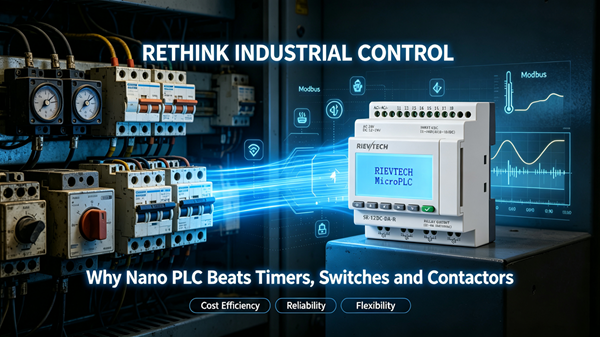
So here is the uncomfortable question: are you buying a PLC because the machine needs one, or because "PLC" sounds safer in a quotation? A programmable relay can handle a shocking amount of real work, and the line between the two families has blurred to the point where the old rules of thumb mostly lie.
What Actually Separates Them Now
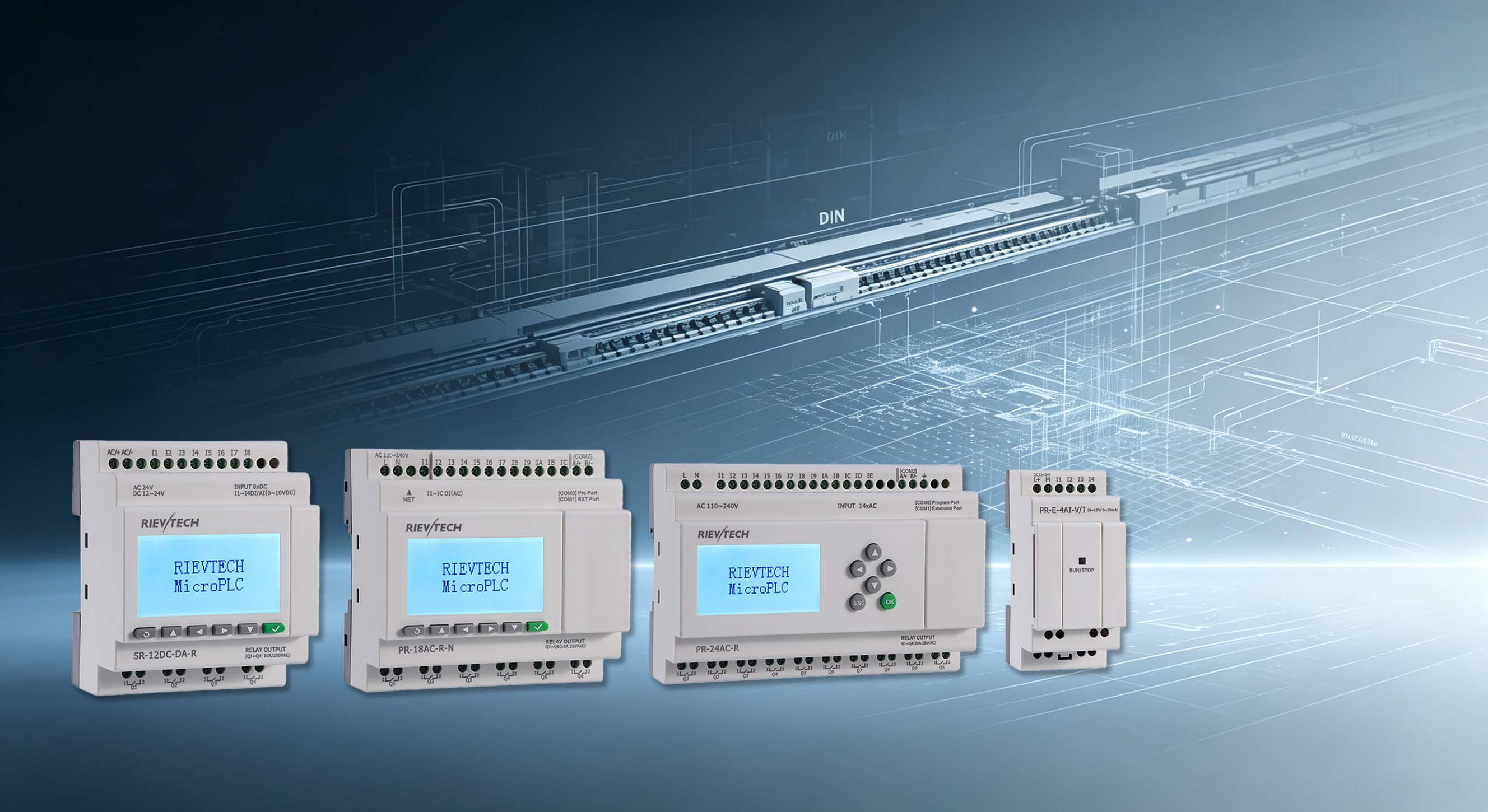
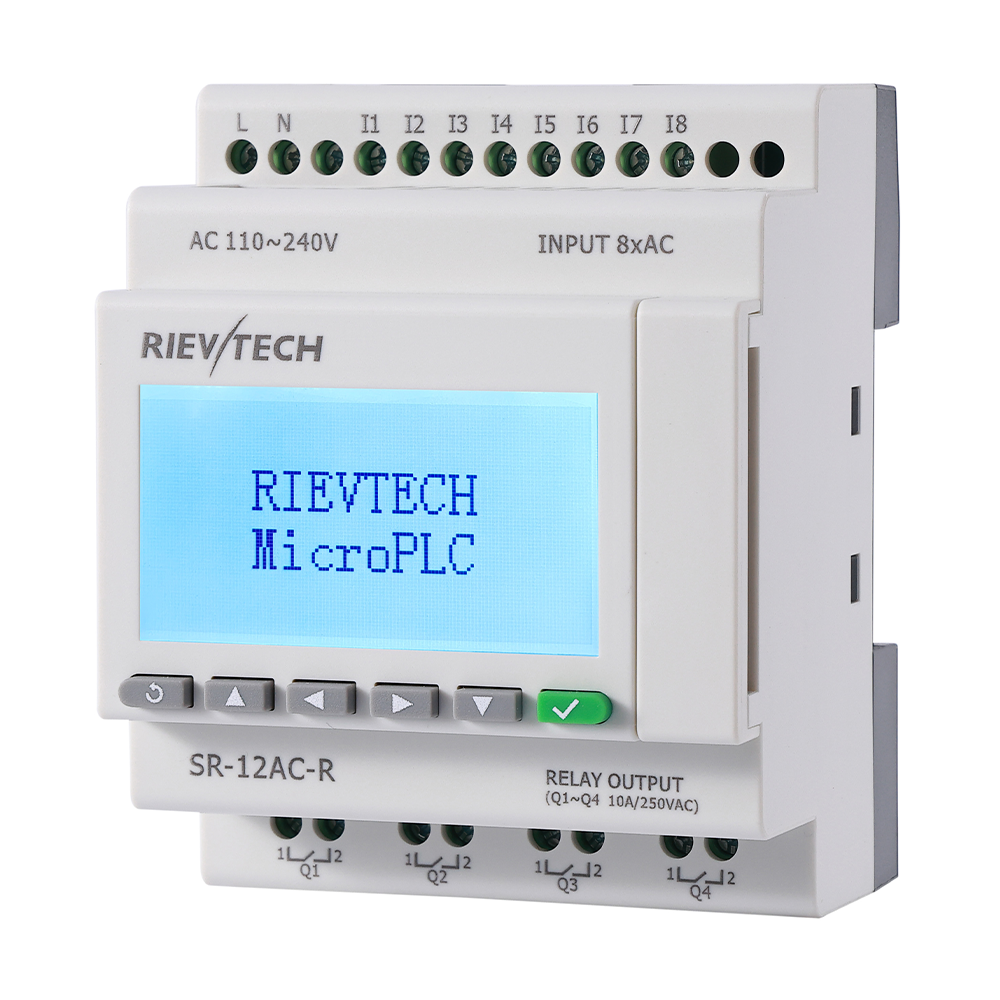
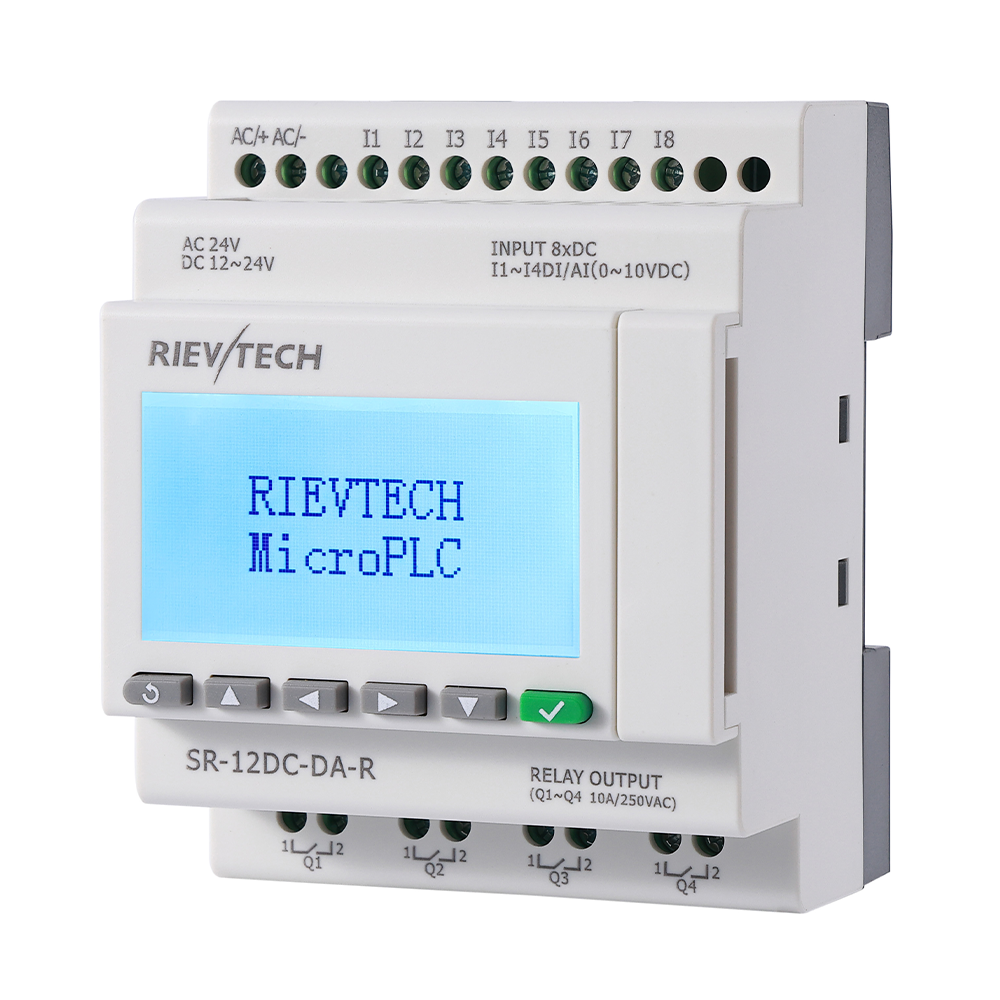
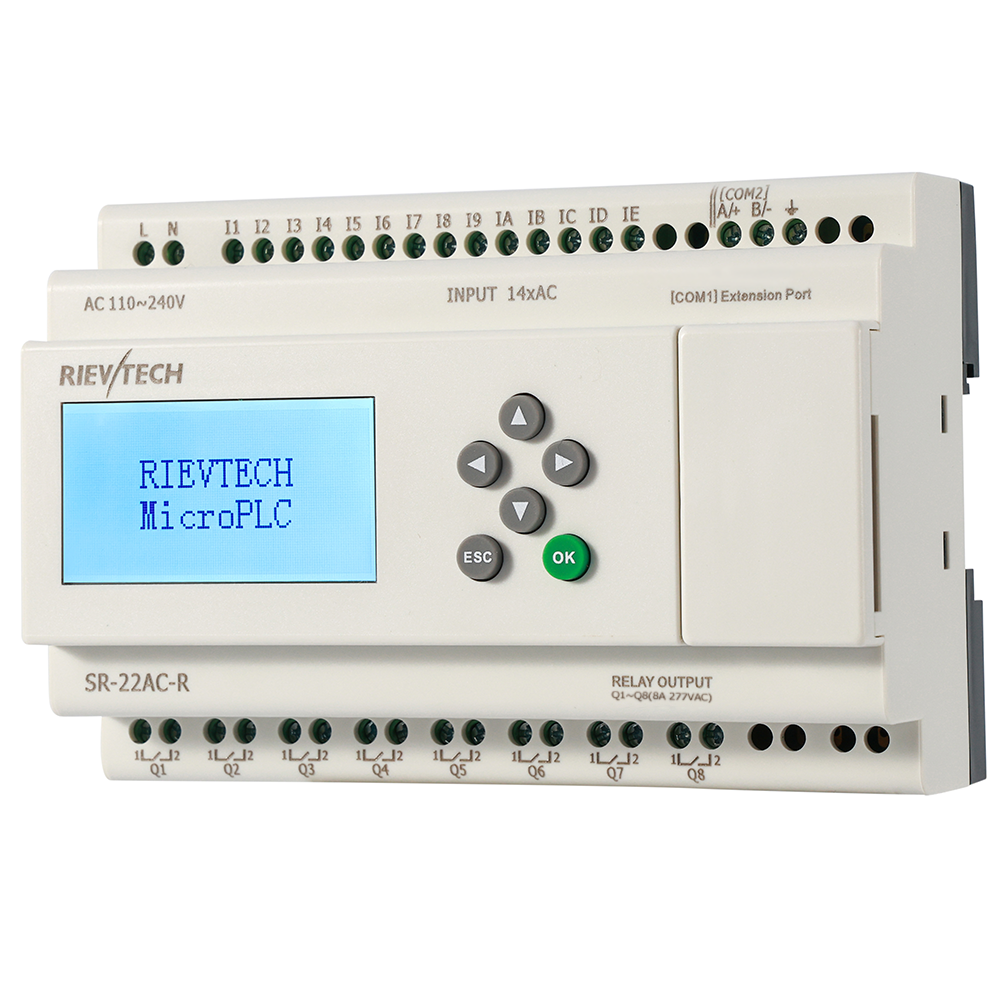
Scan time used to be the divider. A classic Micro PLC scans in milliseconds; a relay logic panel or a simple smart relay updated its outputs a few times per second. That gap is gone. A modern compact controller such as the xLogic SR-22DC-DA-R scans its program fast enough for counting, timing and interlock work that would have needed a "real" PLC ten years ago, and it does it with an LCD and a keypad bolted onto the unit itself.
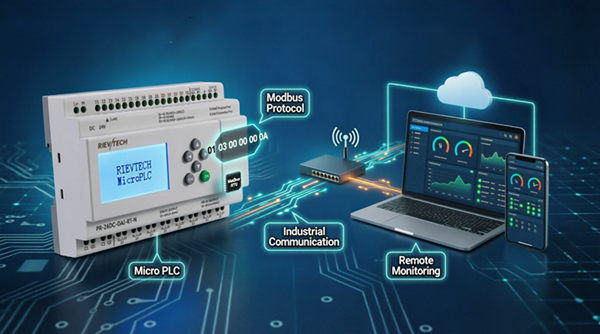
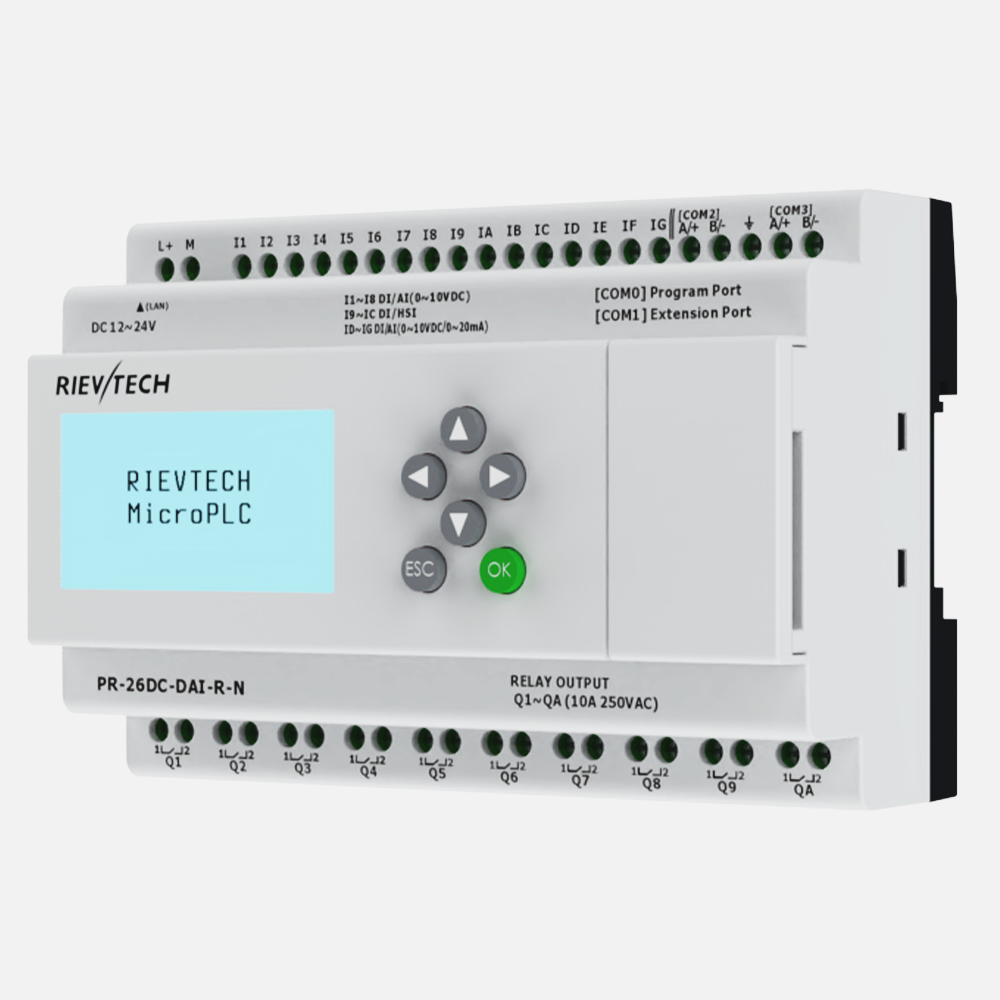
The remaining differences are practical, not mystical. Memory is the first one: a PLC carries more program memory, more function blocks, more room to grow. Communication is the second: if you need Modbus TCP, MQTT or BACnet out of the box, make sure the relay-class unit you are looking at actually has an Ethernet port and not just RS485. And I/O density is the third — a PR-series CPU from Rievtech can reach 282 I/O points with sixteen expansion modules, which is no longer "small" by anyone's definition.
Three Machines, Three Honest Answers
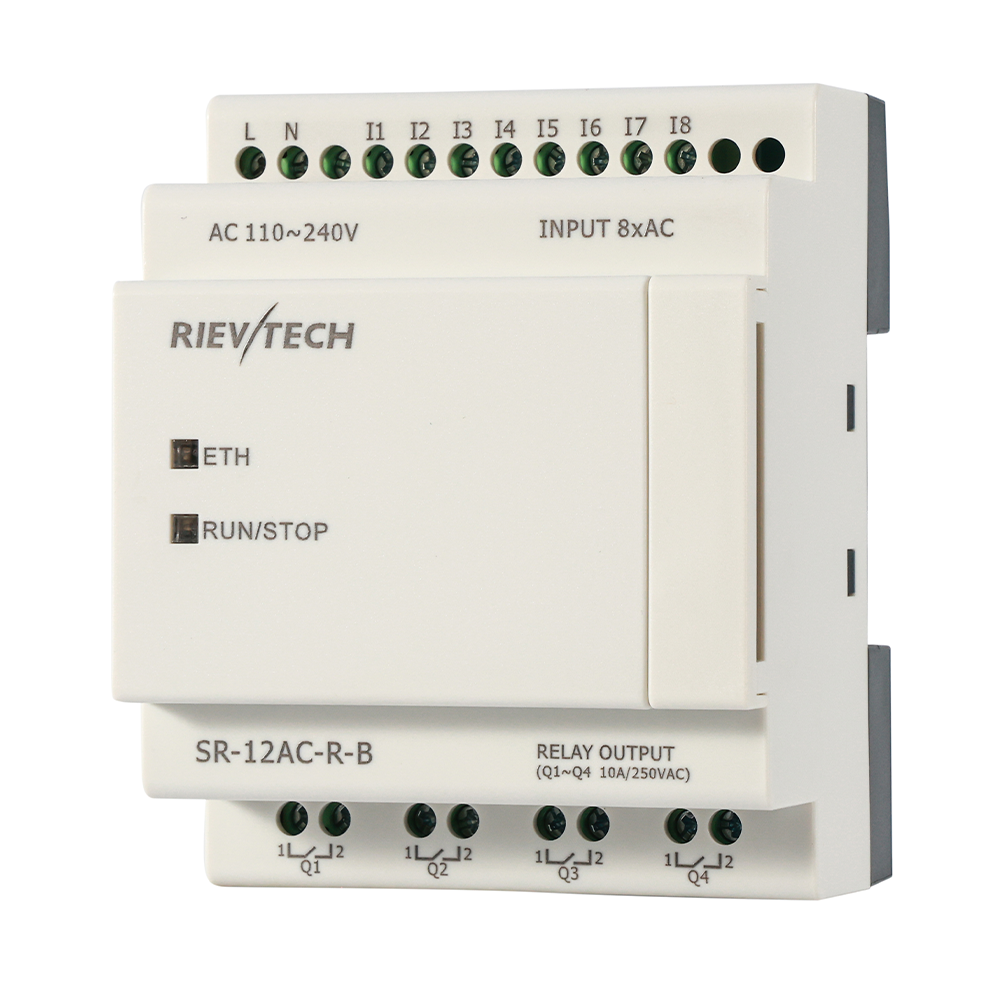
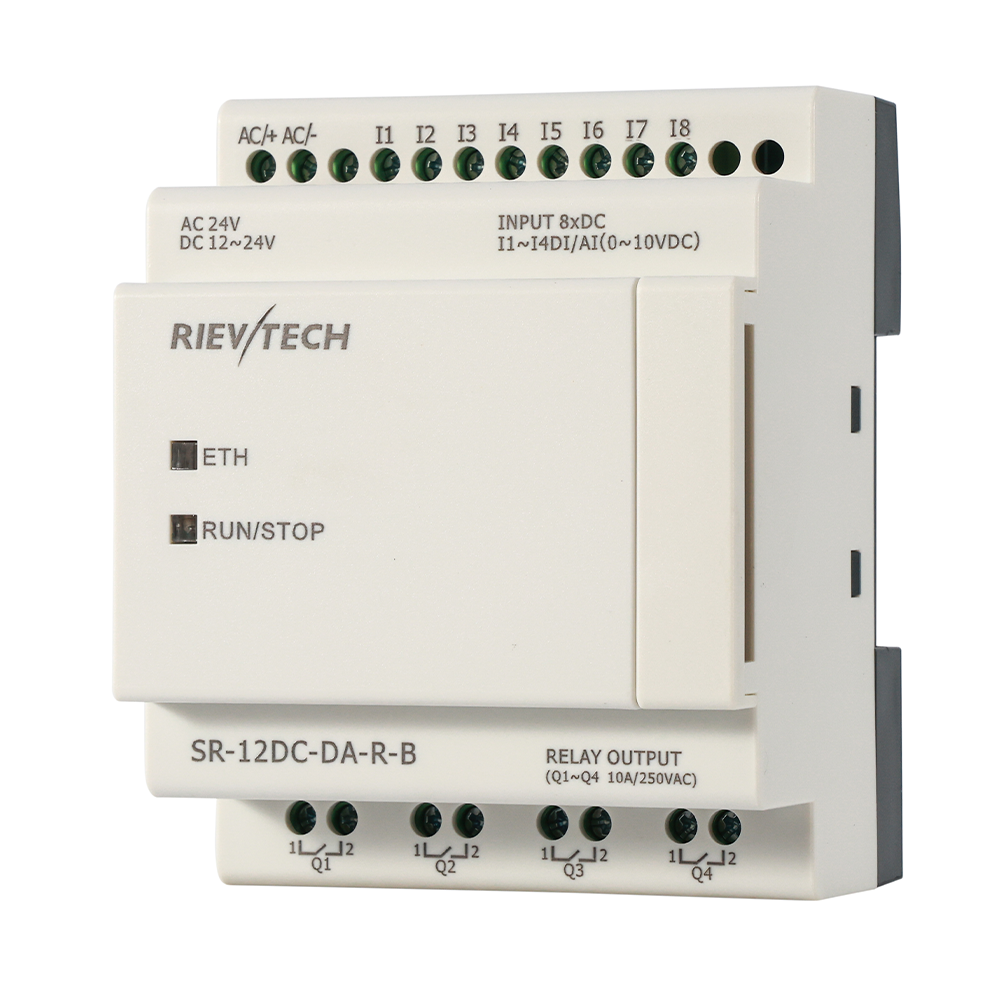
Take a water pump station. Two pumps, level switches, dry-run protection, a float alarm. The control logic is about forty function blocks in xLogicSoft. A programmable relay does this all day, and the customer can read the pump status straight off the front LCD without a laptop. PLC would be overkill.
Take a packaging line with a servo axis, a vision system and recipe handling. That needs real motion control, real data buffers, real networking. Nobody should squeeze that into a smart relay, and nobody sane would try.
Scan time is the other thing people over-weight. A relay-based panel reacts to an input change in tens of milliseconds, which is plenty for a pump station, a lighting schedule or a gate. The xLogic controllers scan their FBD programs fast enough that timing-critical jobs — 65 kHz counting on the SR models, PID loops on the PR series — run without special attention. If your process needs sub-millisecond reaction, you are not shopping for a smart relay; you are shopping for a servo system, and you already know it.
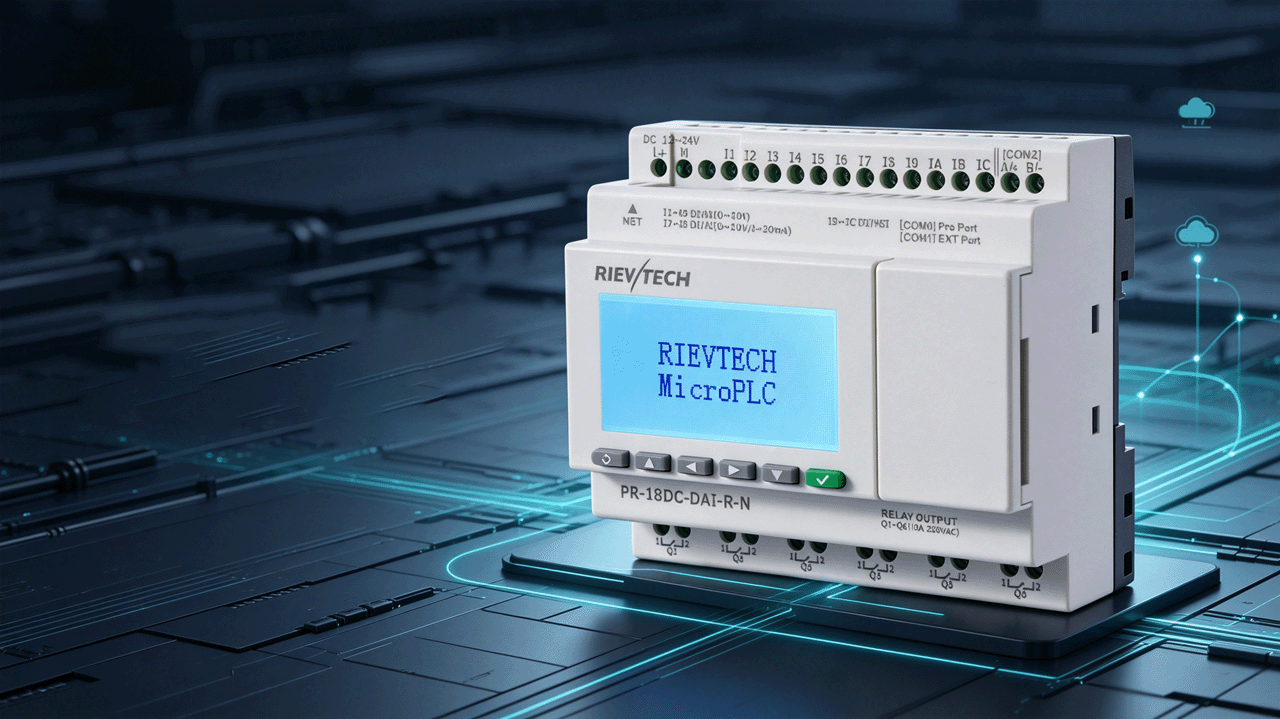
Then take the machine that lives in the grey zone: a small filling machine with a counter, two pneumatic cylinders, a heater with PID and a HMI asking for Modbus data. Honestly? A PR-series Micro PLC with built-in PID and Ethernet is the sweet spot. It is programmable in the same FBD software, it costs a fraction of a modular PLC rack, and it keeps the panel small.
A Cost Table That Tells the Truth
Numbers beat opinions, so here are the numbers we see in real quotations:
- Smart relay (12 I/O, relay out, LCD): hardware roughly $40–90, programming free with xLogicSoft.
- Micro PLC (18–26 I/O, analog inputs, PID, Ethernet): hardware roughly $100–200.
- Modular PLC (CPU + power + I/O cards): hardware $300–800 before the enclosure grows.
The cabinet, the wiring and the commissioning usually cost more than any of those boxes. That is why the real question is never "which controller is more powerful" but "which controller finishes this machine with the least total cost and the fewest headaches."
The Decision Rule We Actually Use
Ask two questions. First: does the machine need more than one communication protocol, real analog control loops, or more than about thirty I/O points? If yes, go PLC-class and stop thinking. Second: does the job reduce to timers, counters, interlocks, pump alternation, lighting schedules or simple analog monitoring? If yes, a programmable relay is not a compromise — it is the right tool, and it is easier for an electrician to maintain than a PLC program with a hundred internal tags.
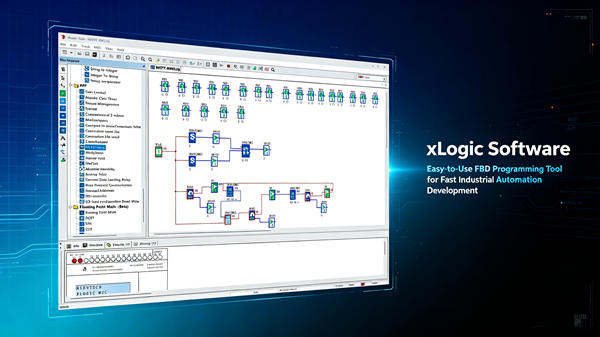
If you still cannot decide after the checklist, do the five-minute test: write the program. Open xLogicSoft, drag the function blocks for the job you have in mind — the timers, the counter, the interlock — and see how they fit on one page. Two or three seperate jobs on one screen and you are done. A program that spills onto two pages and still needs more I/O is a PLC job. The software is free and the test takes less time than the arguments about it.
Maintenance is the hidden vote nobody counts. A PLC program with three hundred internal tags needs a controls engineer to look at it; a smart relay program with forty visible function blocks can be read by the site electrician who changes contactors. When we ask buyers why they stuck with the compact controller, the answer is almost always the same: because their maintenance team can actually follow it. That is a cost advantage that compounds every year the machine runs.
One more thing worth saying out loud: the buyer who picks the bigger controller "for future flexibility" is usually the same buyer who never uses that flexibility, and who pays for it in panel space and spare-part cost for the next ten years. Future-proofing you never use is just today's waste.
Program in FBD, keep the wiring simple, and let the machine decide. You will know within an hour of writing the first function block wether you picked right — and if you picked the compact box, the panel will be lighter, cheaper and a lot easier to ship.