An OEM building thirty identical packaging machines a year was quoting six weeks of lead time and a control cabinet with twelve different vendor boards inside it. When a board died, the machine waited for a shipment from the board vendor, and the customer waited for the machine. Then they put the whole control job on one Micro PLC, and the spair part became a €90 unit from the local distributor — in stock, not on a boat.
Machine builders live and die on three numbers: cost per machine, lead time, and the size of the spare-parts problem they hand to their customers. A compact programmable controller attacks all three at once, which is why so many small-machine OEMs have quietly switched their control platforms in the last few years.
One Part Replaces a Shelf of Parts
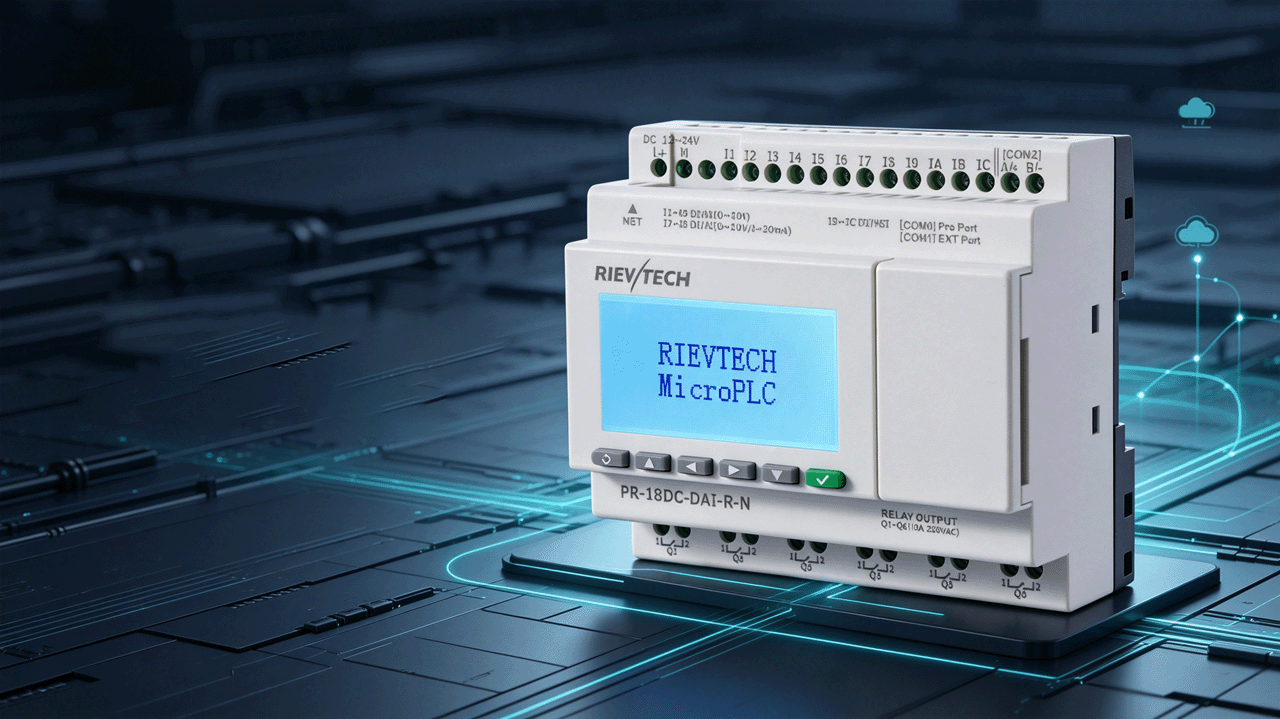
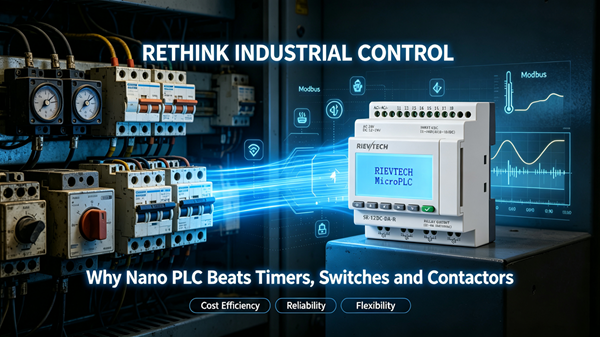
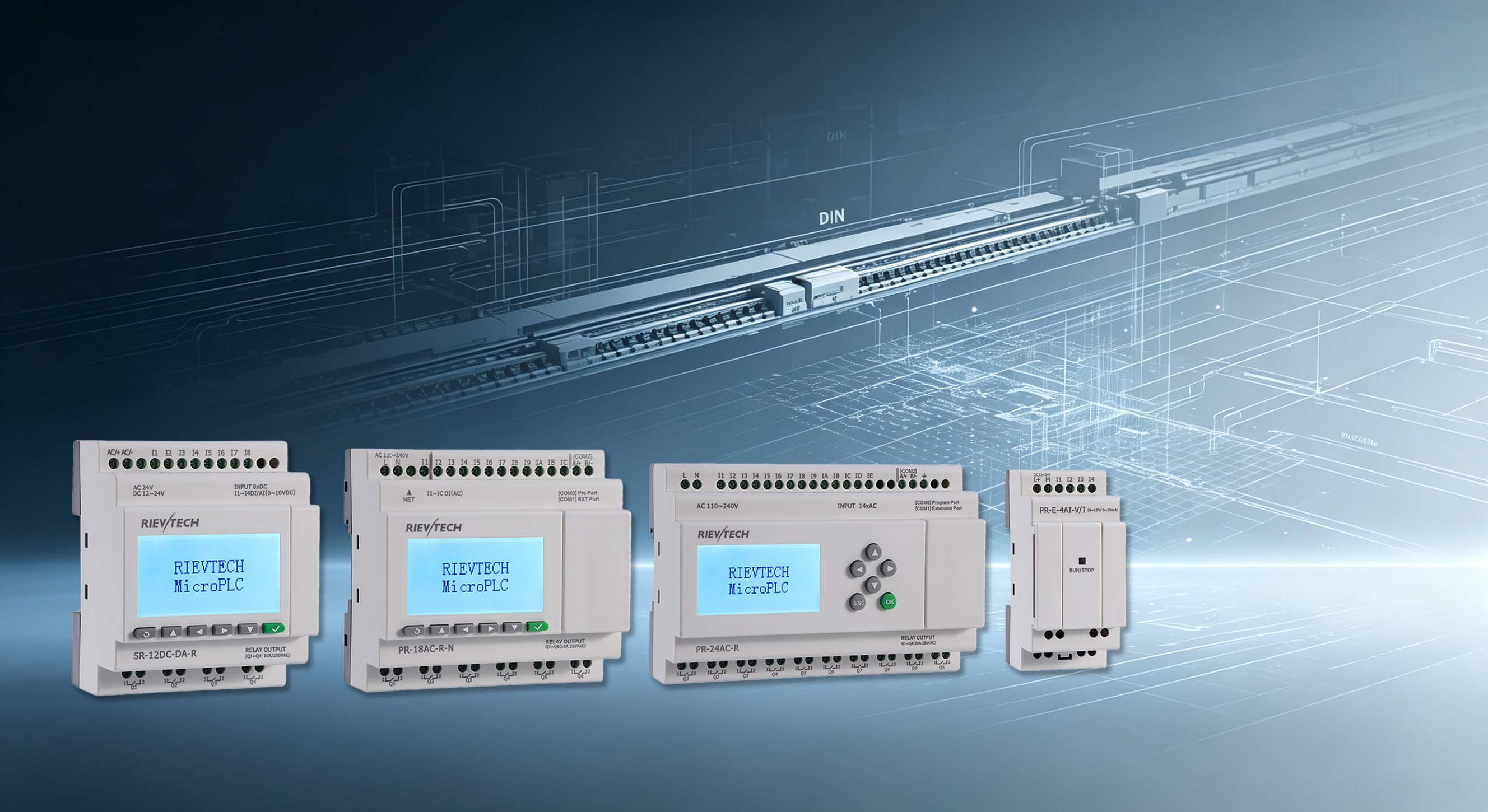
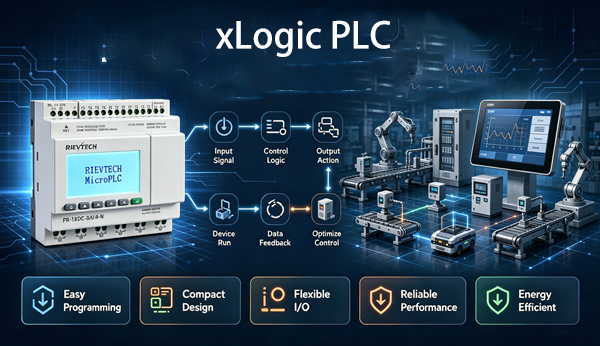
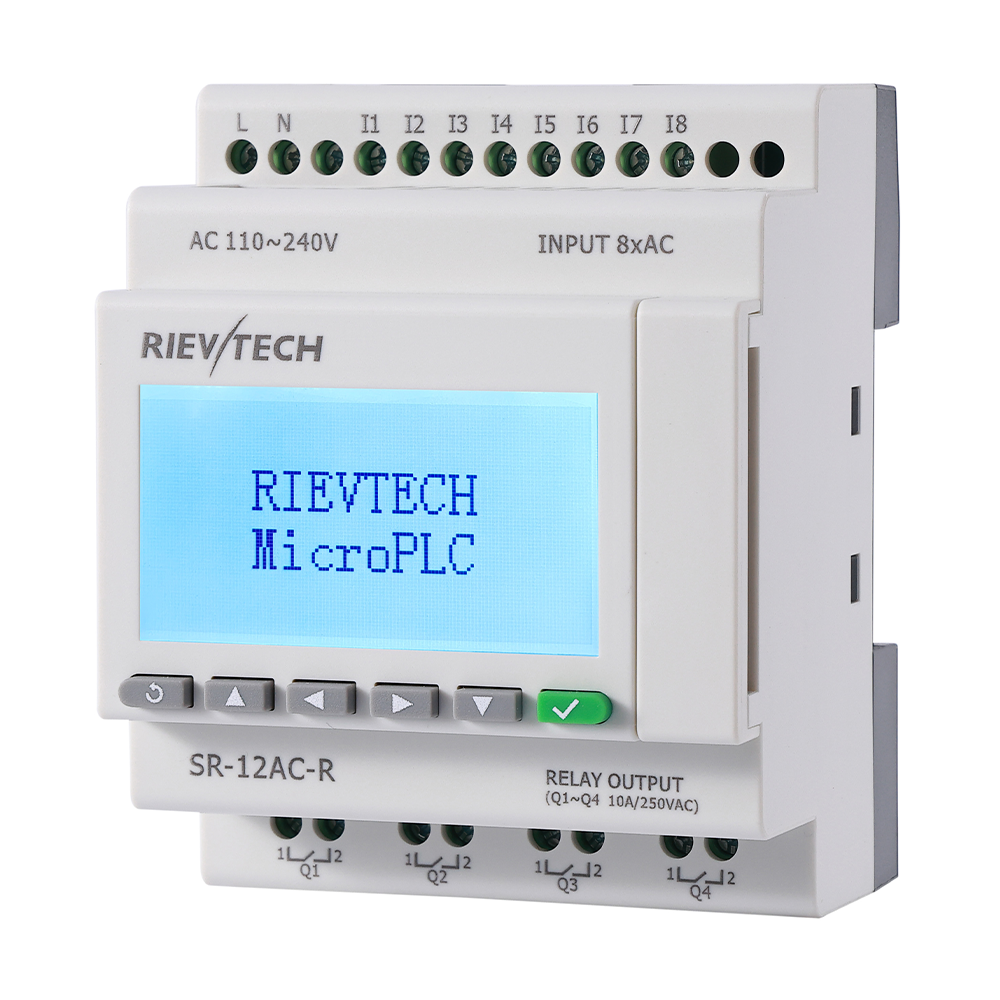
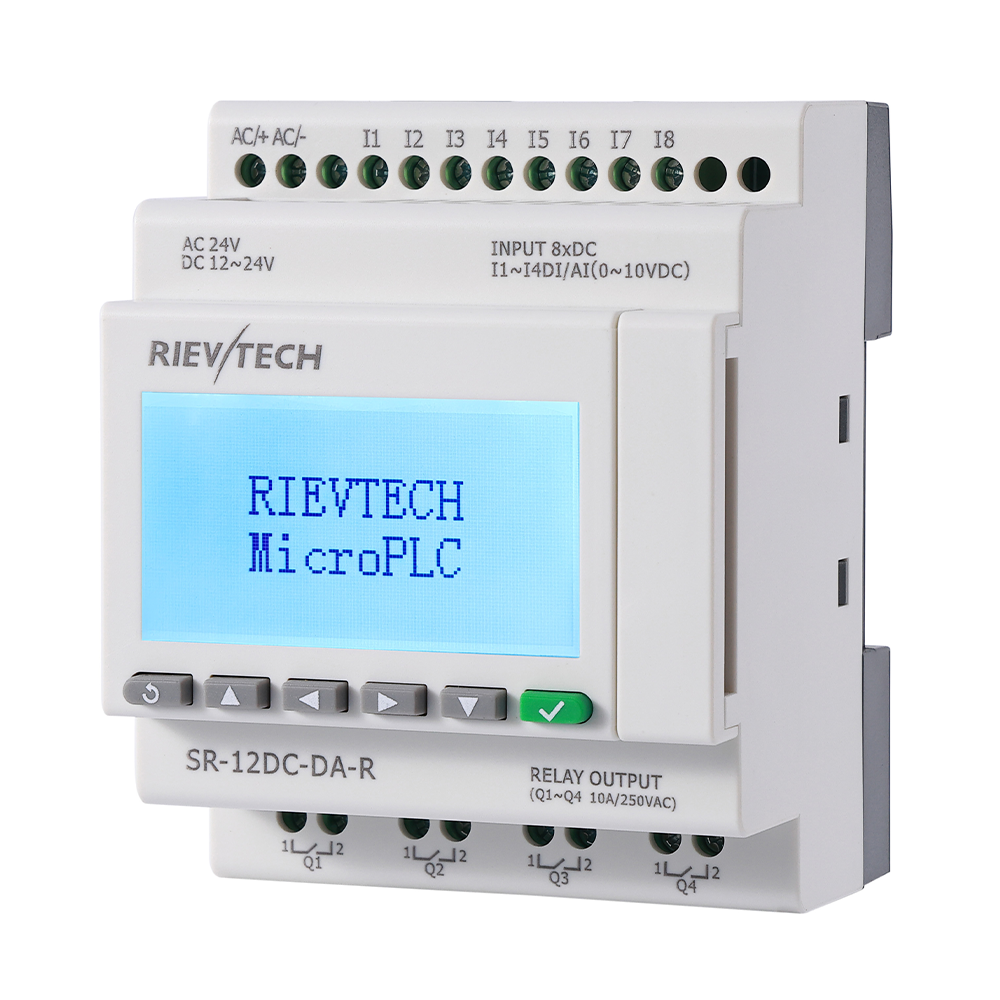
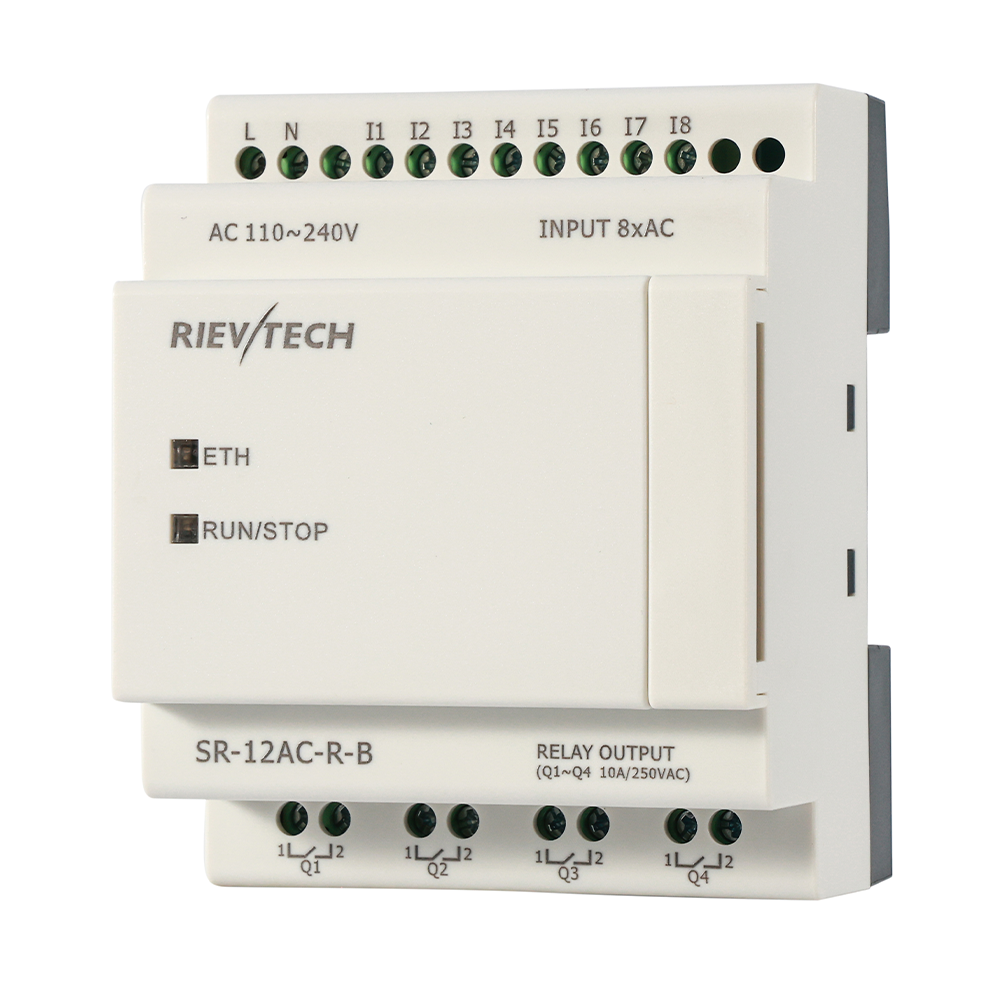
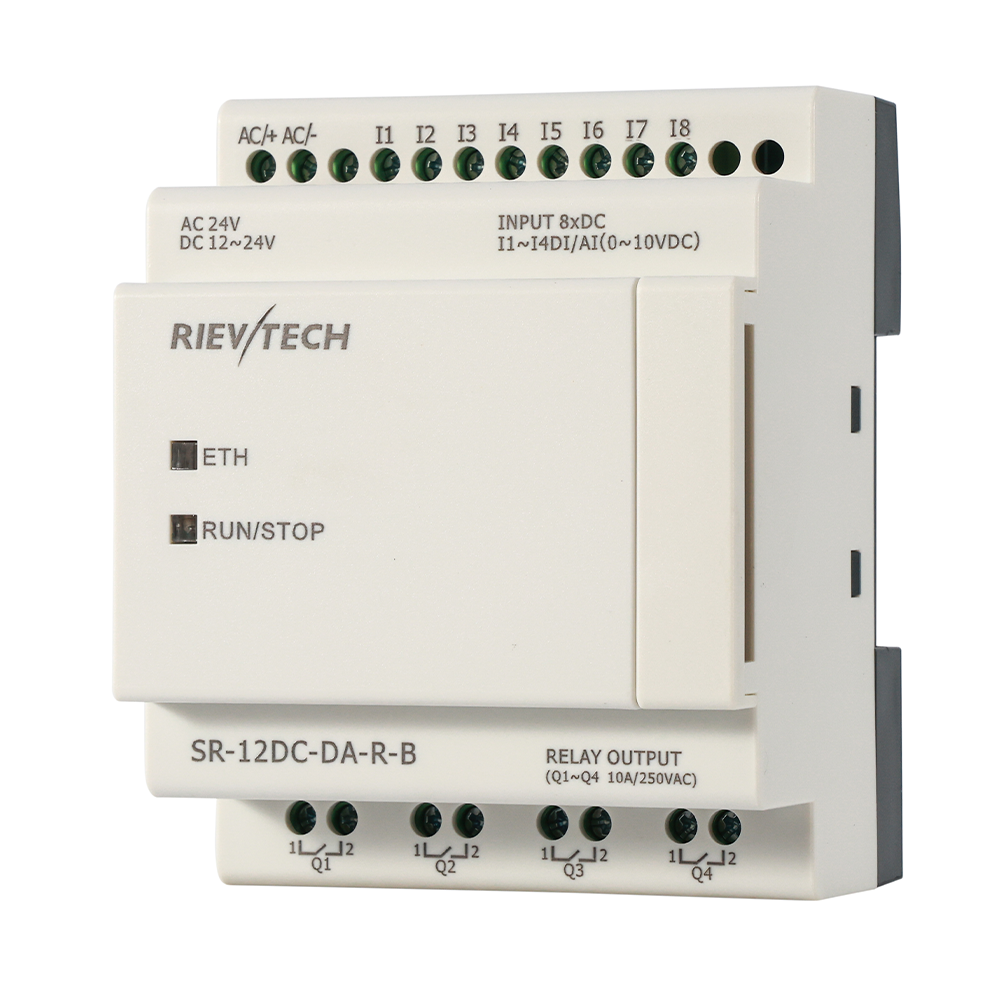
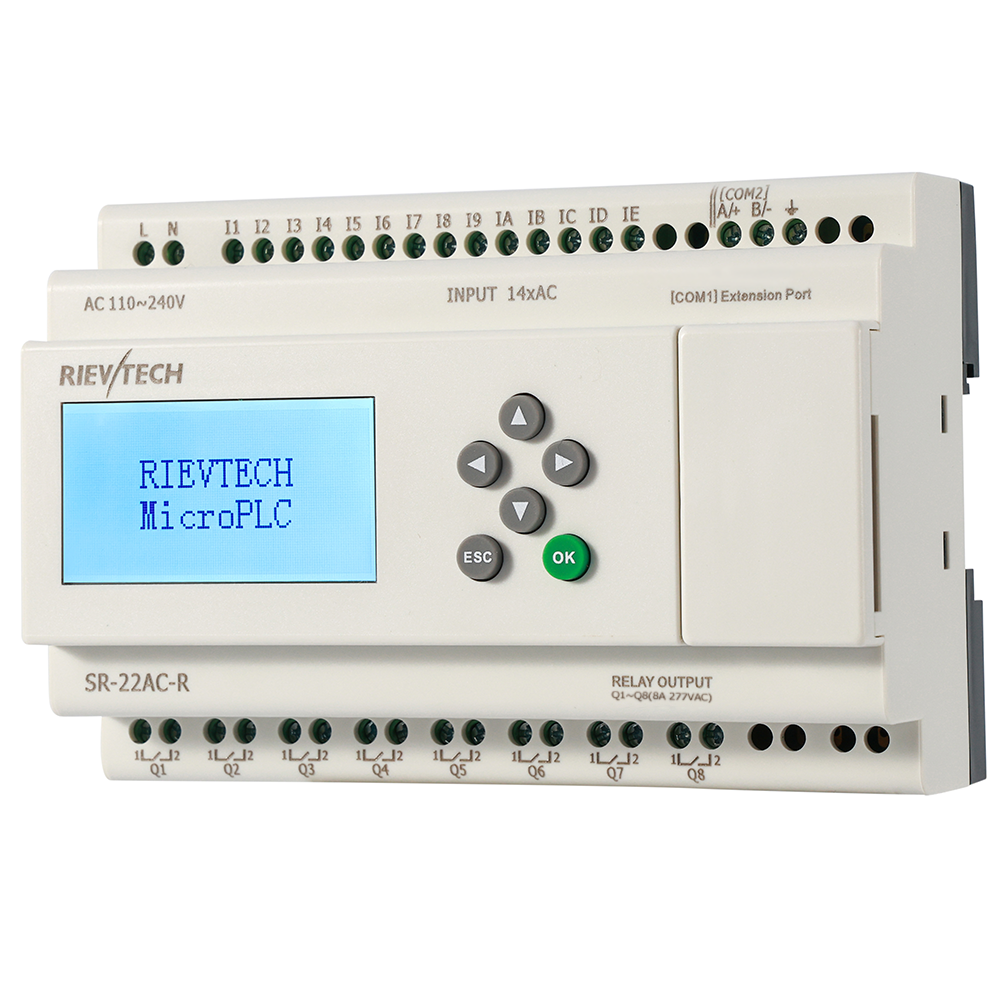
The classic small machine has a stack of timers, counters, a relay or two, and maybe a dedicated temperature controller with its own little display. That is four vendors, four datasheets, four things that can fail. A single SR or PR series controller replaces the stack: the timers and counters are function blocks, the PID loop lives in the CPU, and the operator display is the built-in LCD with its four lines of sixteen characters. One part number on the BOM. One drawing in the cabinet.
And the panel itself shrinks. Fewer devices mean a smaller enclosure, shorter wiring runs, and a neater drawing — the kind of savings the production floor notices when the machine arrives already tested.
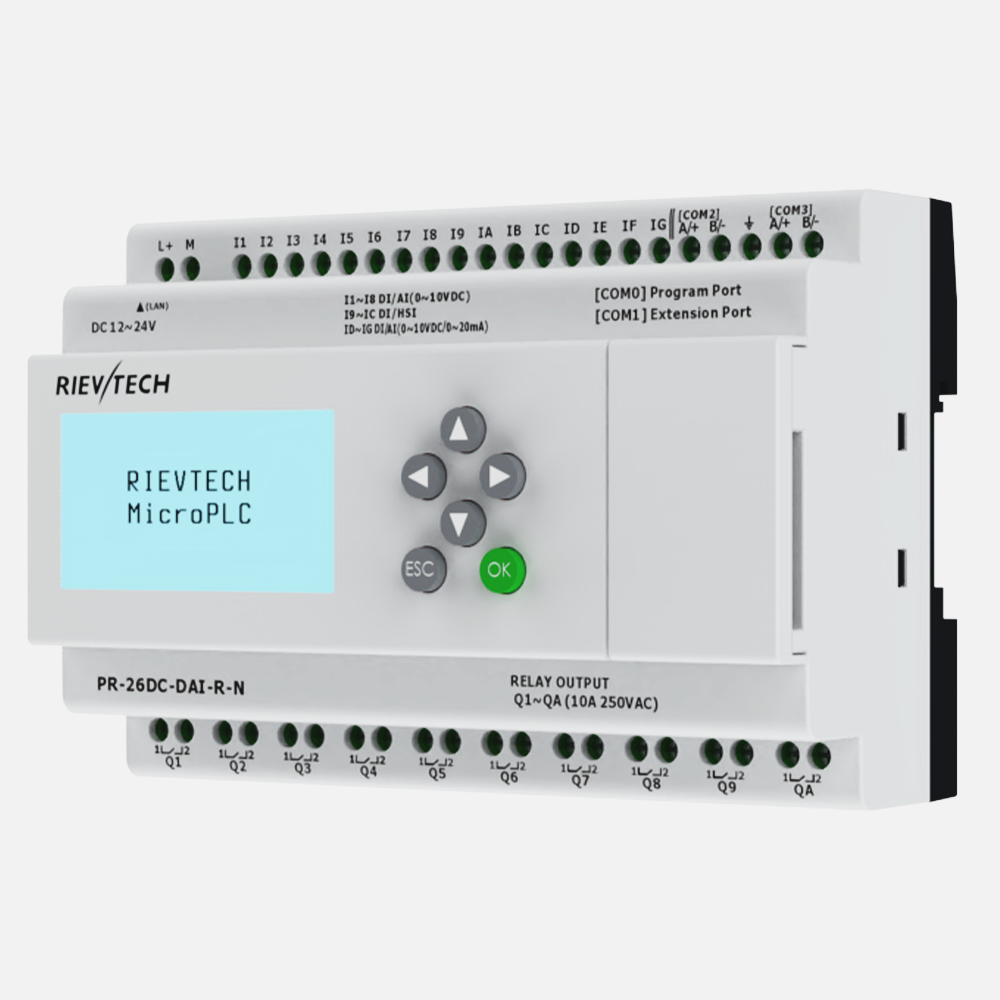
For a machine with analog sensors — a heater with a thermocouple, a pressure transducer, a flow meter — the PR series reads the signals directly on its analog inputs, no extra signal-conditioning boards. The PID loop holds the temperature at setpoint with the kind of accuracy that used to require a dedicated controller, and the setpoint is adjustable from the front panel without opening the cabinet. If that does not simplify your BOM, your BOM was already simple.
The OEM Argument Nobody Makes: Programming Is Inventory
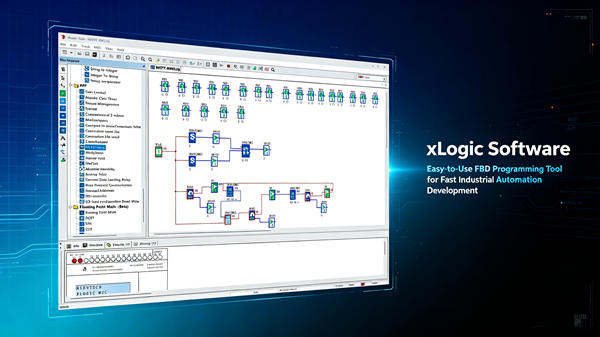
Here is the angle that convinces machine builders: the program is your product's intellectual property, and it is stored in the machine, not in a drawer of paper. When you build the thirtieth machine next year, you load the same program from your laptop in two minutes. When a machine in the field needs a new feature — a different cycle, a new alarm — you email the program file, and the customer's electrician loads it with the free xLogicSoft software. No service call. No spare-part shipment. The feature ships as bits, which is cheaper than anything physical.
The counter-argument is always the same: "our customers don't have programmers." True — but they have electricians, and FBD programs with the sequence visible on the front LCD are maintainable by someone who understands contactors. You are not handing them a software project; you are handing them a relay panel that happens to be adjustable.
Exporting machines means paperwork, and the controller choice touches it. A platform with CE-marked hardware, documented EMC behavior and a datasheet that survives translation saves the OEM a week of compliance questions per country. The xLogic range is built for exactly this: DIN-rail hardware, a published manual, and electrical characteristics that do not change between firmware versions without notice. When the machine crosses a border, the control system should be the least interesting part of the customs file.
Communication as a Sales Feature
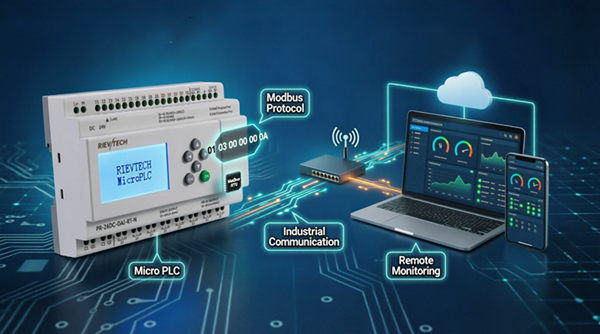
Modern OEMs sell connectivity, even on cheap machines. The Ethernet and 4G models speak Modbus TCP and MQTT, so the machine reports its cycle count, alarm history and service hours to the factory's SCADA or to the OEM's own cloud dashboard. The OEM sees every machine in the field — which machines run hard, which sit idle, which are about to need service. That is market intelligence that used to require a field visit. EasySCADA, free of charge, gives the customer a live screen of the machine without buying anything.
If you are the OEM, that remote visibility also shortens your warranty cost: you can see the fault code and the run history before the customer picks up the phone, and often clear the problem by sending a new parameter set instead of a technician.
Software cost is the quiet differentiator. The xLogicSoft and xLadderSoft programming environments are free, which changes the OEM's calculation in a way nobody expects: your engineers can load the software on any laptop, anywhere, without a licence dongle or an activation server. When a machine in another country needs a small change, the program file and the free software go by email, and the local technician does the rest. Licensing is an invisible tax on control systems; the OEM who does not pay it prices better and responds faster.
Set the spares policy before the first machine ships: one CPU on the shelf per ten machines in the field is the ratio we see working. A failed controller swaps in minutes because the program loads from a laptop, and the parameters — the recipe, the timings, the setpoints — are in the program file, not in a battery-backed RAM that forgot everything. The customer keeps a copy of the program file with the manual, wich costs nothing and removes the single most common cause of OEM support calls.
What to Check Before You Commit
Do not switch platforms on faith. Check four things: I/O count with 20% headroom; the analog channels you actually need; the communication protocol your customer's environment expects; and the warranty and OEM support the vendor offers. Rievtech backs the xLogic line with an 18-month warranty and real OEM support — a parameter that matters more than any datasheet when your machine is down and the customer is watching.
The machine builder who controls his control system controls his margins. The rest of the panel is just copper and steel; the intelligence is one DIN-rail box, and it can be as smart or as simple as the program you put in it.