A broiler house with 12,000 birds lost 200 of them in one hot night, not to disease but to a ventilation fan that never switched on — because the thermostat was mounted in the shade of the fan housing and read a temperature that was always cooler than the house. The birds were fine. The sensor placement was the failure.
Livestock ventilation is unforgiving: birds and pigs have no tolerance for guesswork. Too hot, and they stop eating. Too humid, and amonia builds up and the respiratory problems follow. A compact controller with real setpoint logic beats the wall thermostat with the dial on it, and the reason is not the electronics — it is the ability to think in combinations instead of single readings.
Temperature Stages, Not One Big Switch
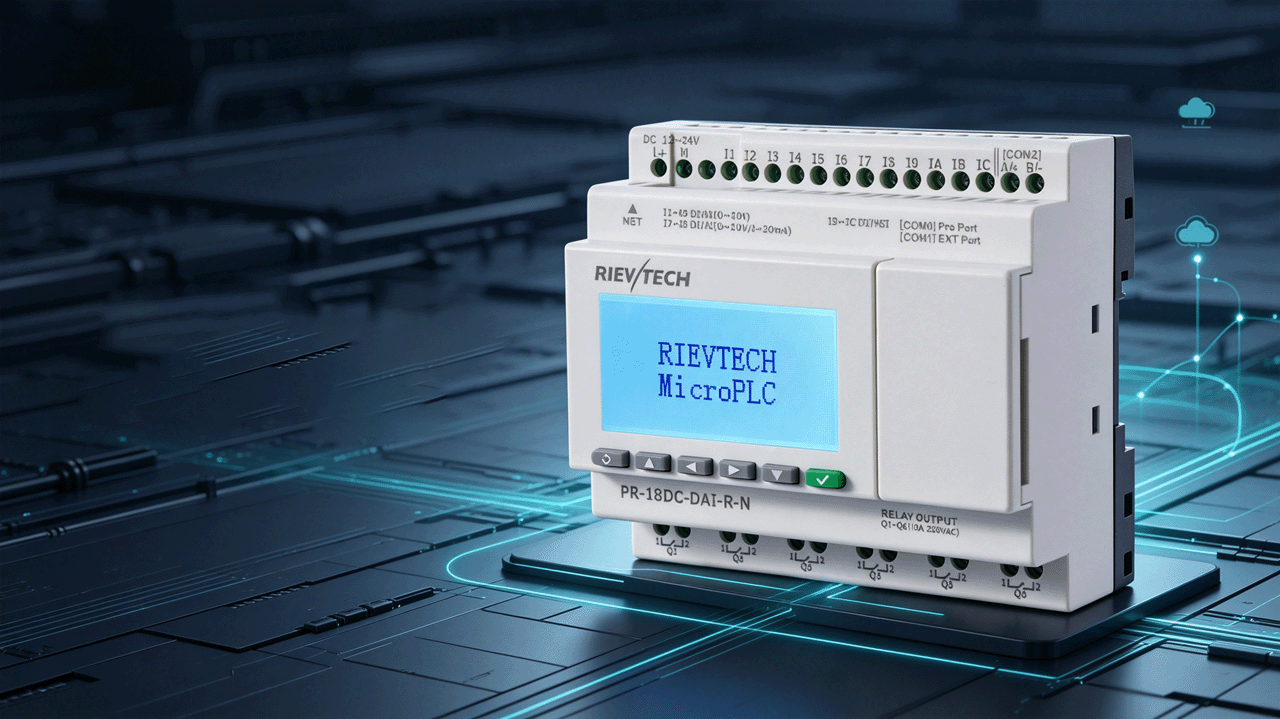
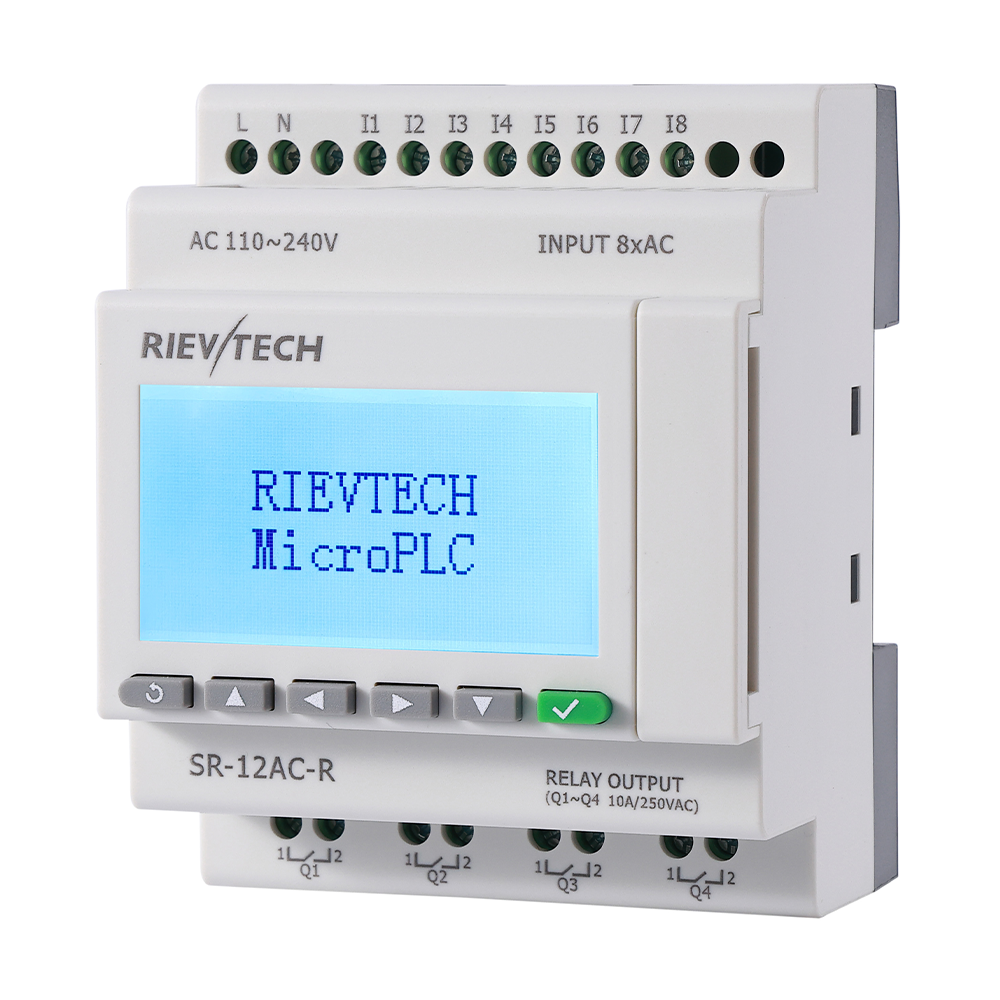
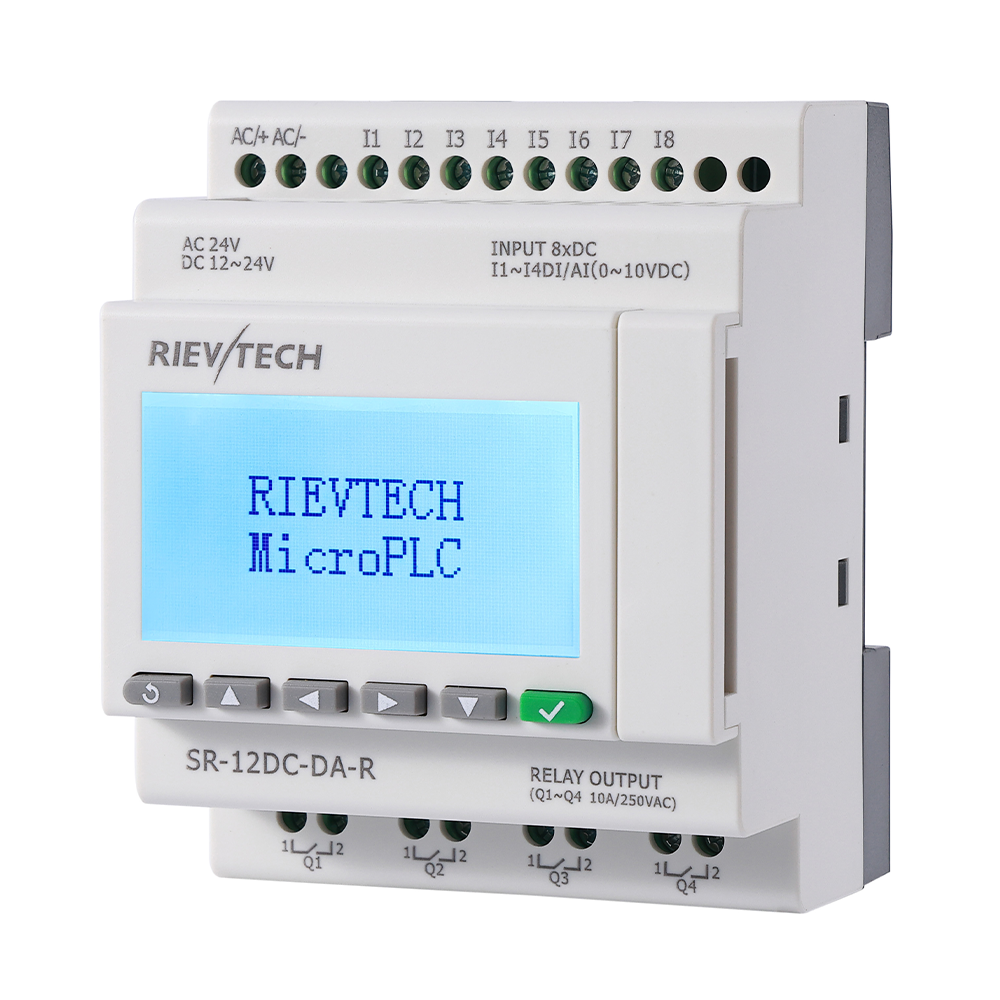
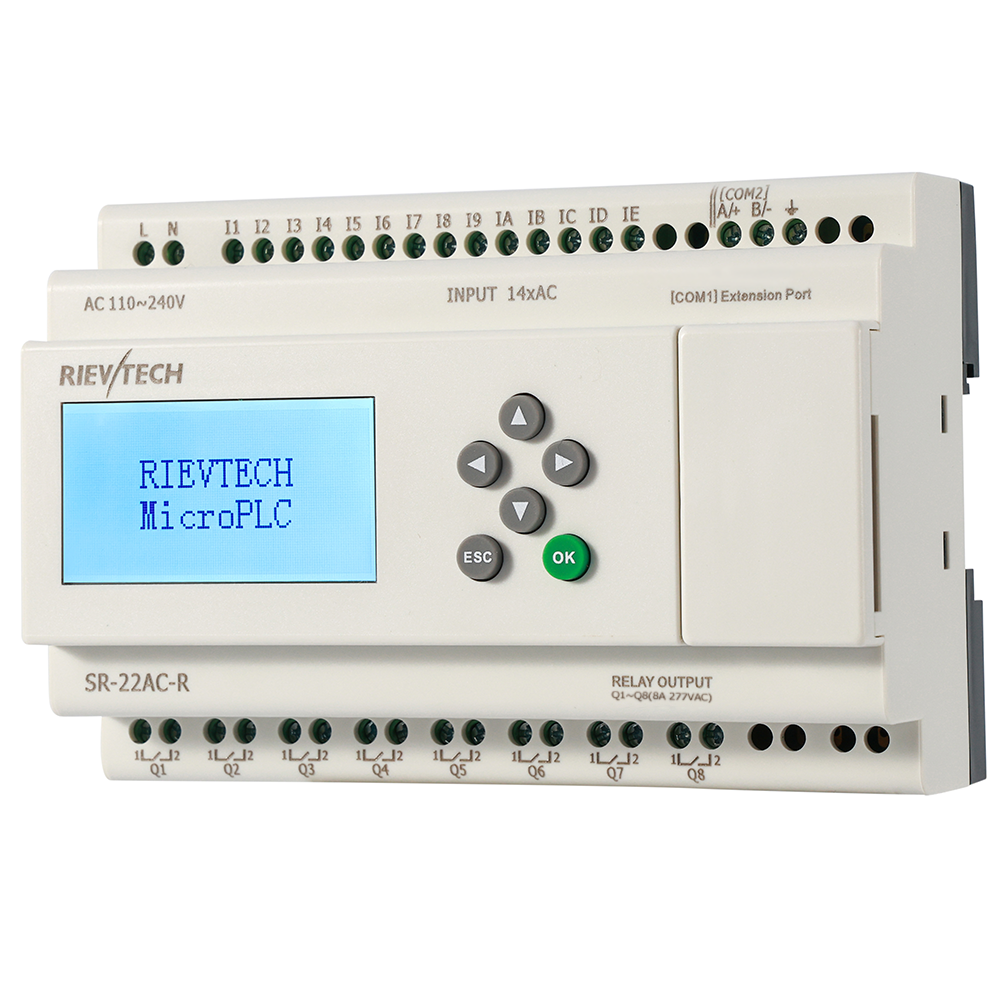
The old system has one relay: too hot, fan on. The better system has stages: minimum ventilation runs on a timer to keep air moving; stage two adds a fan at setpoint +2°C; stage three brings in the evaporative cooling or the pad system at setpoint +4°C. Each stage has its own setpoint, its own hysteresis (via HI-LO function blocks), and its own minimum run time so the fans do not short-cycle. A PR-18DC-DA-R reads the house temperature on its PT100 input, compares it against three setpoints, and drives three fan contactors — all visible and adjustable on the front keypad, which the farm manager actualy appreciates at 11 PM when the house is hot.
One sensor is an opinion; two sensors are a conversation. Mount the temperature sensor away from fans and doors, and if the house is long, average two sensors with the controller's analog math — a single reading from the wrong spot has started more midnight panics than any real fault. The HI-LO block on the averaged value runs the stages; a stuck sensor shows up as a reading that never changes, and a simple comparison against the house's typical range flags it before the birds do.
Humidity: The Setpoint Everyone Forgets
The setpoints should live where the farmer can reach them. On the PR series the front keypad edits setpoints without a laptop, and the hysteresis stops the fans from hunting every few minutes — a fan that cycles constantly wears its belt and its motor bearings in weeks, and the flock feels the draft.
Heat is the loud problem; humidity is the silent one. A house at 28°C and 80% relative humidity is worse for birds than 30°C and 50% — the wet air cannot carry the heat away. An analog humidity sensor on the second analog input lets the controller override the temperature stages: if humidity exceeds 75%, the minimum ventilation stage runs continuously instead of on its timer, regardless of temperature. The birds breathe, the ammonia clears, and the floor stays drier.
The humidity override is two function blocks and a comparison. It costs nothing in hardware, and it prevents the slow, expensive losses that nobody can blame on a specific night.
The Night-Time Schedule That Pays
Livestock houses have a daily rhythm, and ventilation should too. The controller's Weekly and Yearly Timers run a reduced ventilation mode at night — enough air movement to keep the house fresh, not so much that the animals stand in a draft and burn energy keeping warm. In winter, that night-time reduction is fuel savings; in summer, it is the difference between a house that cools evenly and one where the birds crowd away from the draft.
Add a power-failure watchdog while you are at it: after a power cut, the controller resumes ventilation automatically when the supply returns, instead of leaving the house sealed until a human shows up. In a broiler house in July, that is not a convenience feature. That is the difference between a hot house and a catastrophe.
Feeding and drinking lines can share the same controller without sharing the same brain space. A feed auger runs on its own timer, the drinker line pressurises with a float-controlled pump, and both wait their turn in the sequence — but the ventilation stages must keep priority, because a hot house kills faster than an empty feeder. The controller juggles three small programs on one CPU, which means one enclosure, one spare part, and one person who knows where everything is. That consolidation is worth a surprising amount to a farm that has five sheds and one electrician.
Winter ventilation is a different animal: too little airflow and the ammonia and moisture build up, too much and the heating bill explodes. The minimum ventilation timer becomes the main actor — a fixed schedule of short fan runs that keeps the air moving without chilling the house — and the temperature stages act as override, not as the primary control. The same controller does both seasons, which is the point: the farm changes the mode by changing the program, not by hiring an electrician.
Clean the sensors on the same schedule as the fans. A dust-coated humidity sensor drifts high, the controller runs the fans harder, and the house gets colder and more expensive. Ten minutes with a soft brush once a month is the cheapest maintenance in the building — and the birds will thank you with better feed conversion.
Alarms That Phone Home
The most important output of a livestock controller is not a fan contactor — it is the alarm. High temperature, high humidity, fan failure (run command without run confirmation), power loss: each event needs a latching alarm that only a person can reset, plus an audible call via the built-in buzzer (F63 flag) or a remote notification over the 4G models' MQTT link to a phone. Waiting until morning to discover a failed fan is how the 200-bird night happens twice.
Set the setpoints with the animals in mind, not the datasheet. Watch one week of logged temperature and humidity, adjust the stages, and the house will tell you whether the logic is right. The birds always tell the truth. And they tell it faster than any spreadsheet.