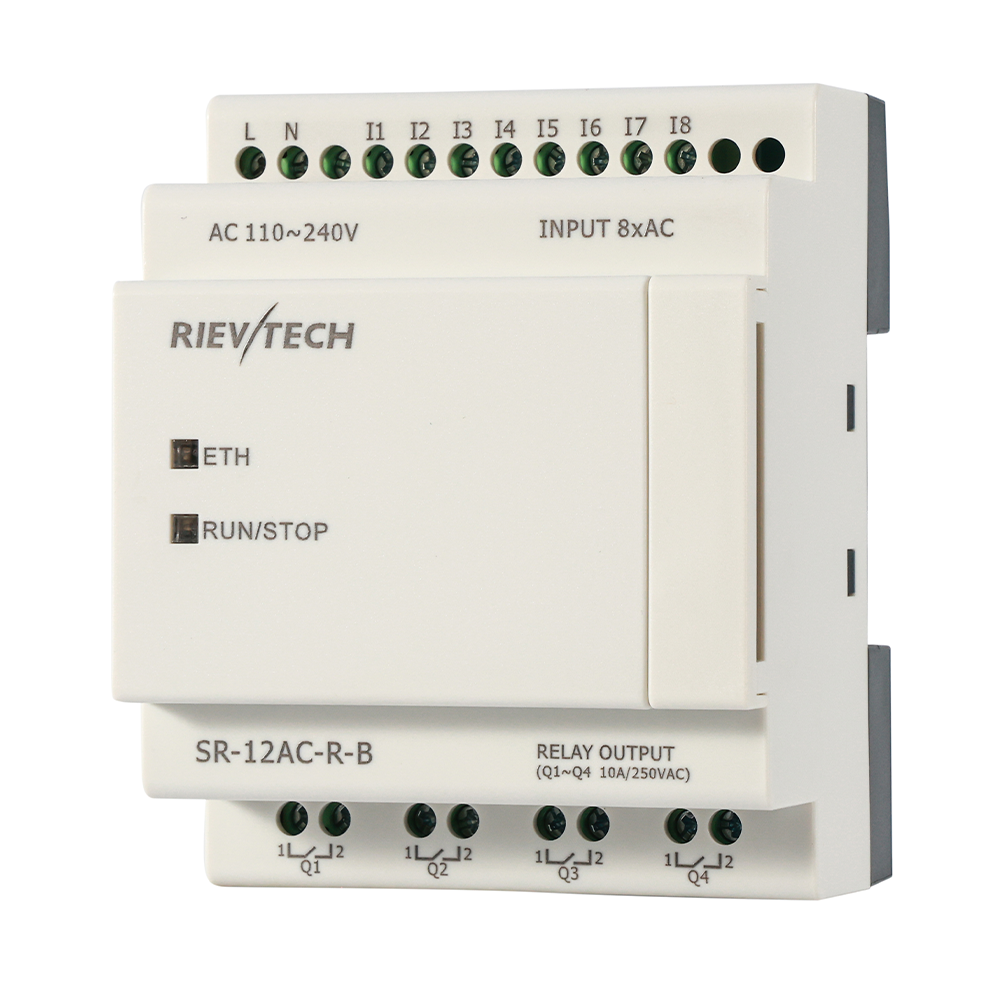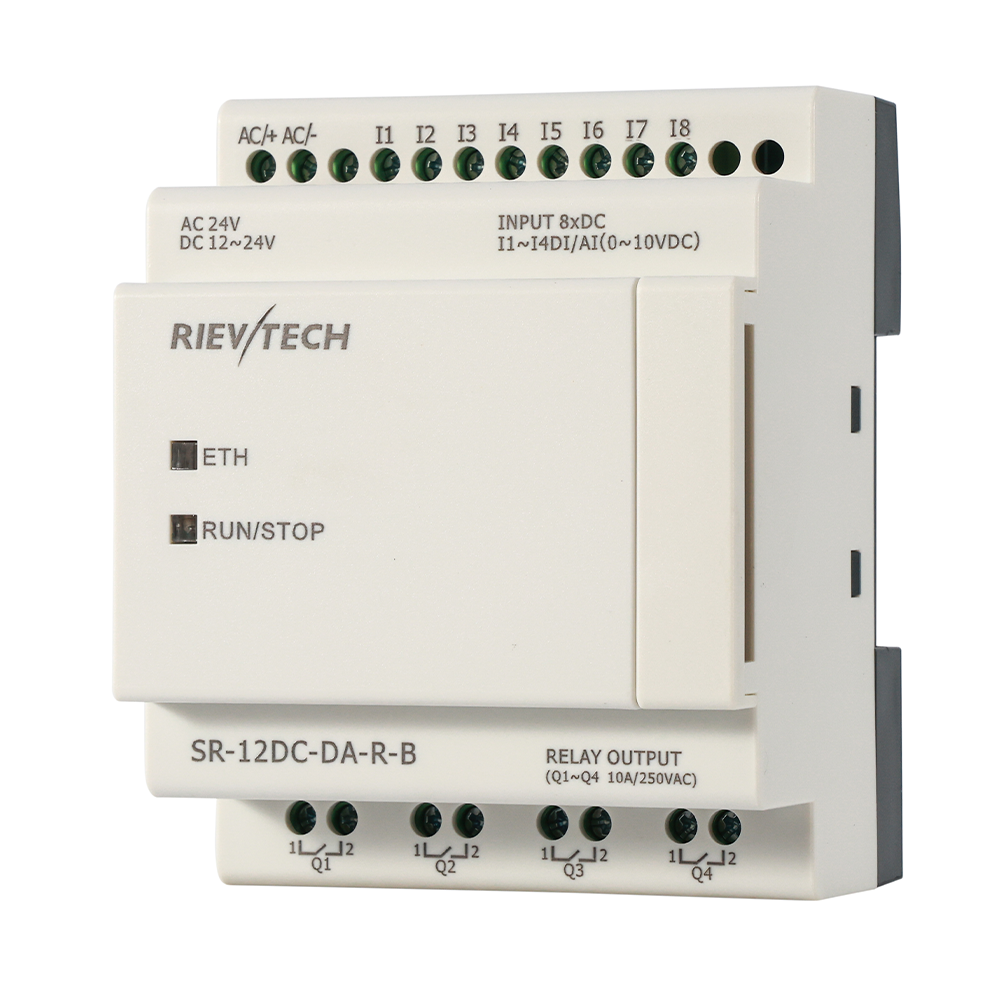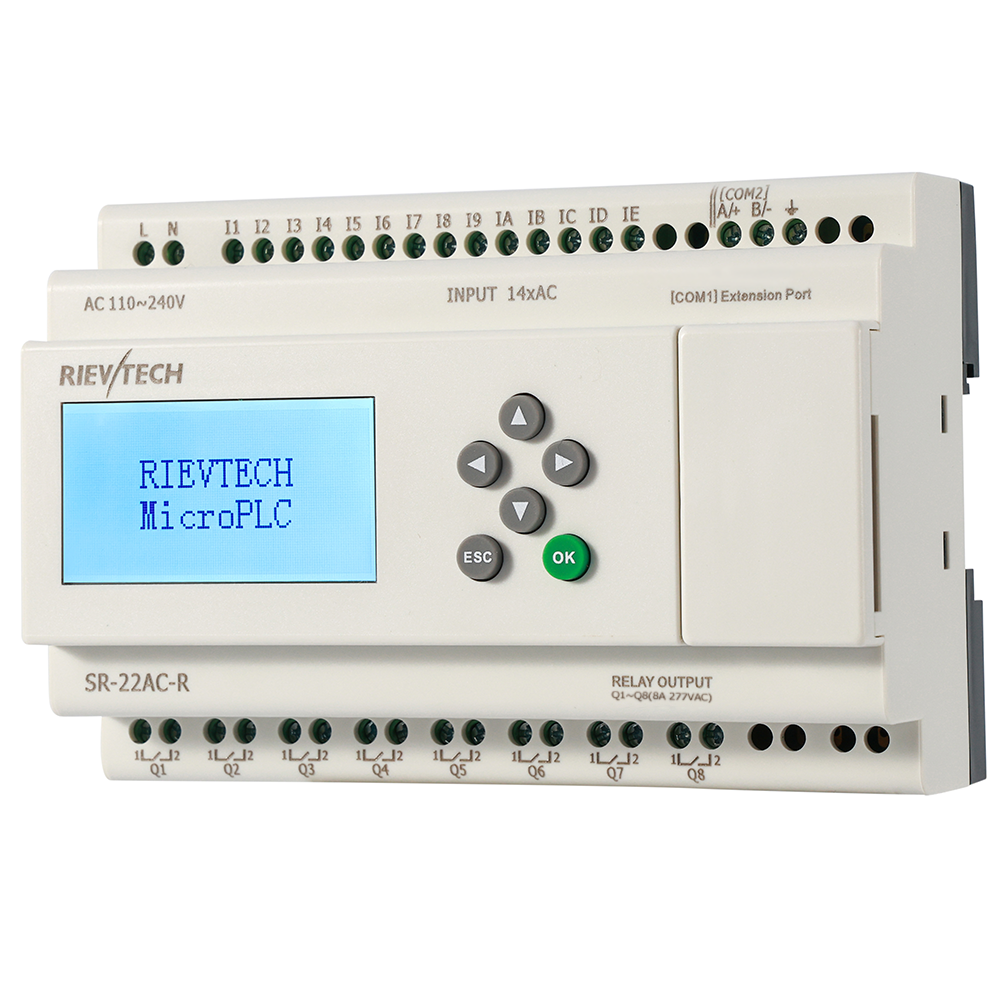
A three-floor office building in Nanjing cut its AHU running hours by 31% in the first month after the ventilation schedule was put on a real-time clock instead of a wall switch. 31%. The facility manager did not buy new fans, new dampers or new anything — he bought a controller that knows what day it is and what time it is.
That is the quiet secret of HVAC retrofits: most energy waste in small buildings is not bad equipment, it is bad control. Fans running at night. Heating fighting cooling across a corridor. Filters that run on a fixed timer instead of a pressure differential. A compact programmable controller fixes each of these with a handful of function blocks, and it does it without a building management system license.
The Three Jobs an AHU Controller Actually Does
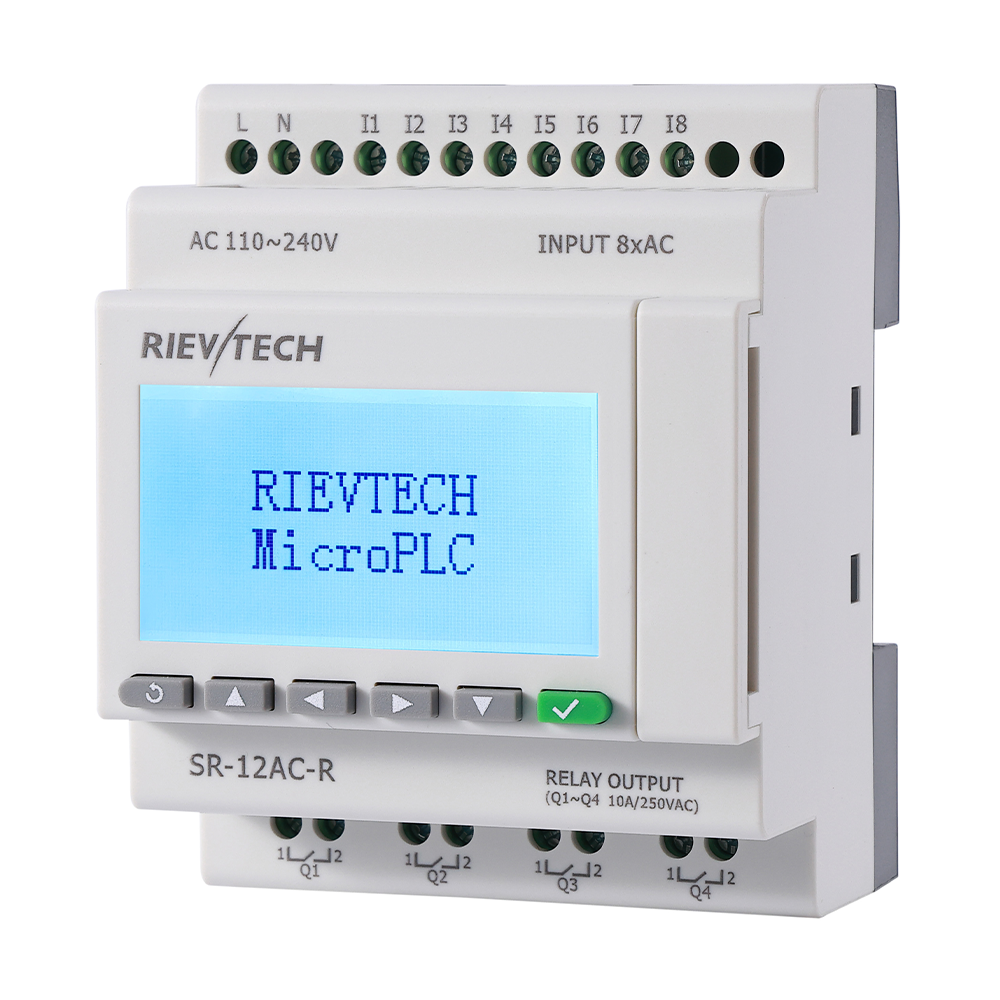
Ventilation scheduling is job one. A Weekly Timer turns the air handling unit on at 7:30 before the staff arrives and off at 19:00 after they leave, and a Yearly Timer handles the weekend and holiday calendar so the unit does not waste electricity on public holidays. RTC backup matters here — the xLogic controllers keep the clock for twenty days on the internal battery, so a power cut on Friday does not mean a confused schedule on Monday.
Job two is temperature interlock. The AHU should not blow cold air in winter just because a thermostat was left in cooling mode, and it should not run the heating coil with the supply fan off. HI-LO function blocks compare supply and return temperatures; the fan, the heating valve and the cooling valve get interlocked so the machine can only do one sensible thing at a time. A PID loop on the return air sensor holds the space within a degree, which is more than enough for a typical office floor.
Do not stop at the AHU. The same controller runs the floor's fan coil zones or the fresh-air damper. A CO2 sensor on a conference room input tells the controller to boost the fresh air when the room is full and to close the damper when it is empty — an adjustment of a few percent of outdoor air that moves the energy bill more than any ten-percent change in setpoint, and most buldings have two or three such rooms.
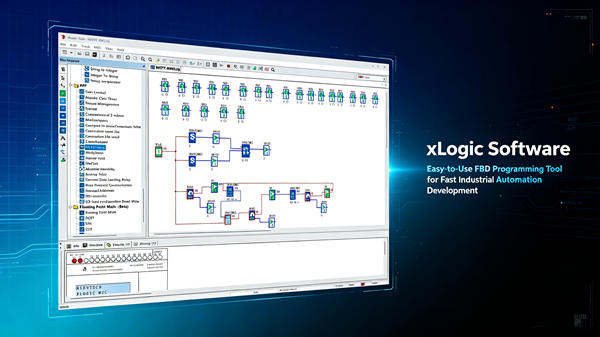
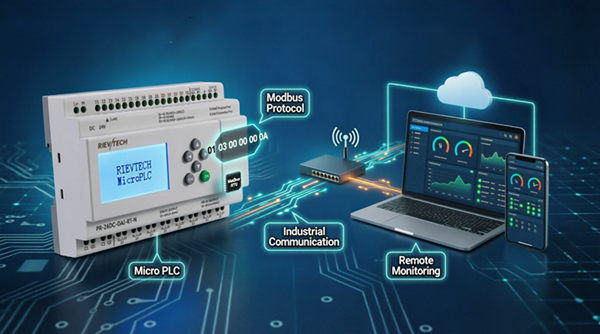
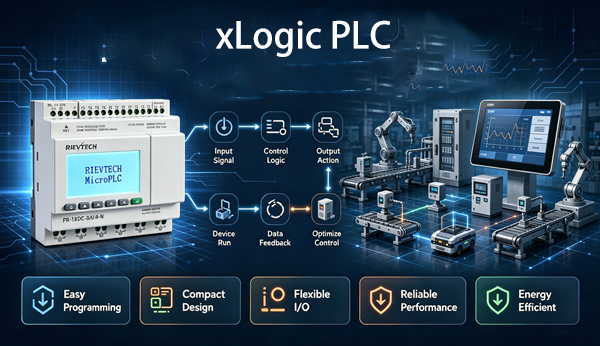
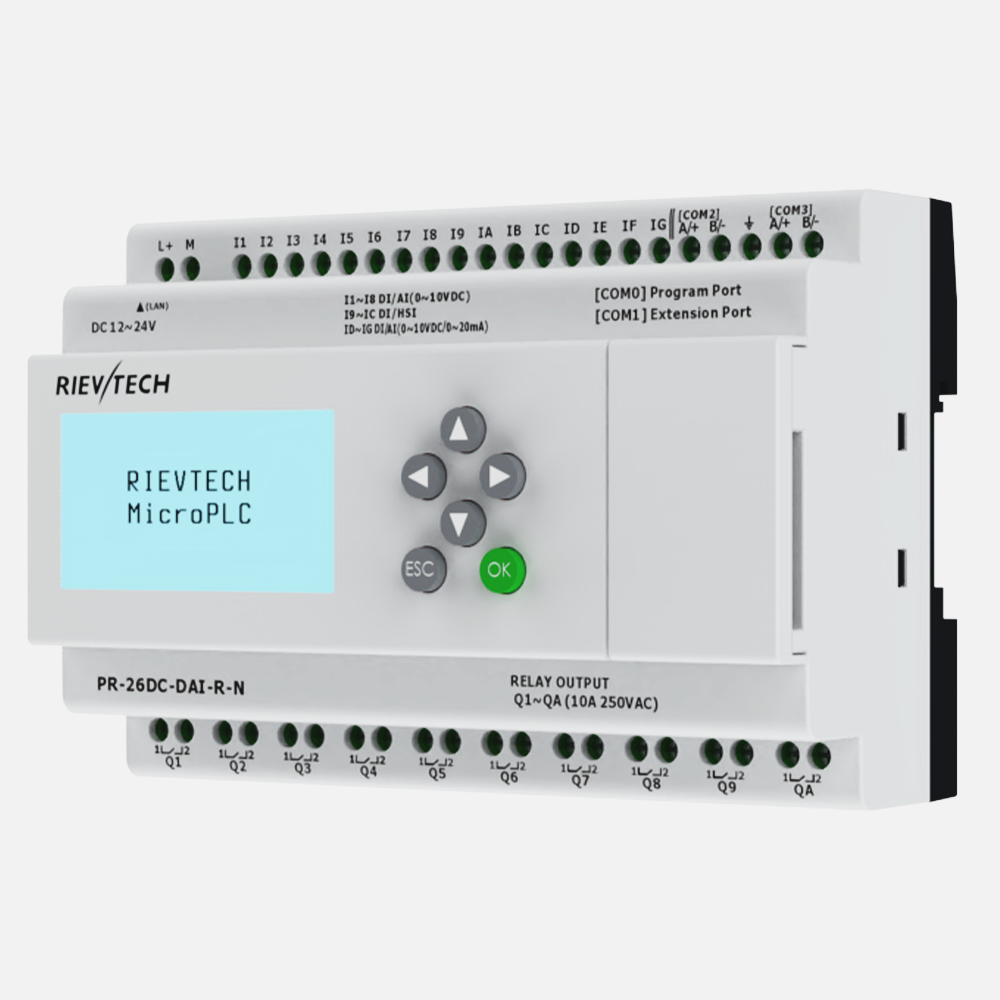
Job three is integration. The building owner wants to see the AHU status from a browser or a BMS, not from walking to the plant room. The HC-series HVAC controllers and the PR Ethernet models speak Modbus RTU, Modbus TCP and BACnet IP directly, which means the little DIN-rail box talks to the big building automation system as an equal peer. No gateway, no licence, no translation layer.
A Retrofit That Paid for Itself
Take a 4000 m² plant with four AHUs and a boiler that had run all winter because "someone had to keep the pipes warm." The retrofit was simple: each AHU got a controller, supply and return temperature sensors (PT100, read directly on the analog inputs), and a schedule. The boiler now runs against an outside-air reset curve instead of a paranoid summer setting. First season's gas bill dropped by roughly a quarter. The hardware cost less than one month of that saving.
The installation detail that separates a clean retrofit from a headache: decide the fail state of every valve before you wire it. A heating valve that opens on loss of power keeps a boiler room from freezing but cooks a floor in summer. The controller can invert its outputs with one function block, so get the valve's spring position right and let the logic match it, and never trust the scedule to be the thing that saves you — the schedule is the last thing anyone checks in a panic.
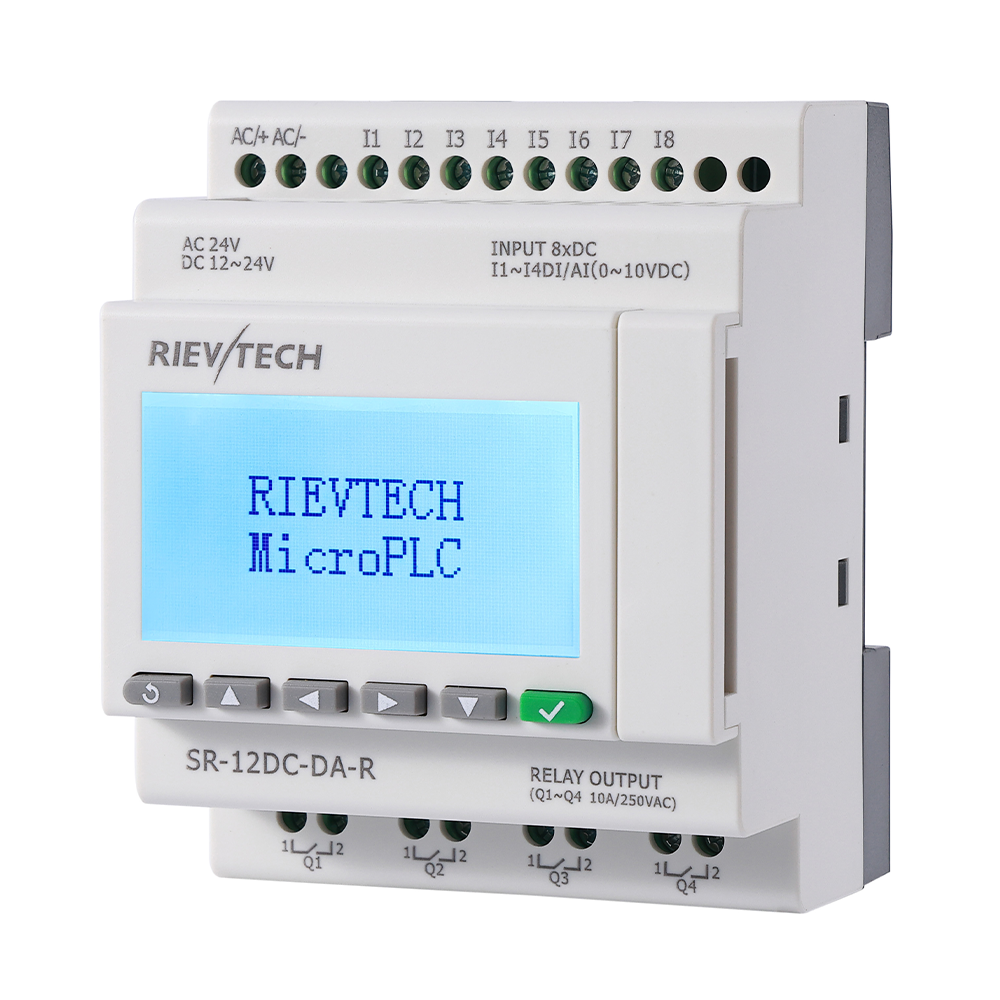
The sceptics always ask about the dampers and valves — do they play nice with a micro controller? Yes. Modulating 0–10V actuators connect straight to the analog outputs, three-position actuators need only two relay outputs, and the built-in outputs on the HC units are rated for direct switching of small valves and contactors. For bigger loads you add one contactor; the logic stays the same.
What the Sales Pitch Never Tells You
Big BMS vendors sell you the software, the licence, the commissioning engineer and then the annual maintenance contract. A programmable controller in an enclosure costs a few hundred dollars and a day of FBD programming, and the local electrician can change the schedule without calling anyone. Is the big system more polished? Sure. Is it four times the price more polished? No. That gap is the entire business case for compact HVAC control.
A chilled water loop changes the picture in one way: the pumps and the chiller have to move together. The controller starts the chilled water pump, proves flow, then releases the chiller — the same proof-and-release pattern as the boiler, but with a temperature target instead of a schedule. Add a low-limit interlock on the chilled water return temperature and you have protected the chiller from a frozen evaporator, which is the most expensive mistake a small plant can make. The whole cascade is four function blocks and a few inputs; the insurance it buys is worth more than the controller.
Once the schedule is in, give the building manager a number to watch. The controller's run-hour counters and Modbus link put live energy data on the BMS screen — fan hours, pump hours, heating valve position — and the manager can see the difference the retrofit made instead of waiting for the bill. A number on a screen changes behaviour; a bill in the mail only changes next month's budget.
Start with one AHU. Put the schedule on, interlock the fan with the coil, log a week of run time. The energy bill will do the convincing for you — and the next three AHUs will be retrofitted before the quarter ends, because nobody argues with a 31% number. And that number comes from a controller that costs less than one service call.